Active Shooter Incidents and What They Teach
Every active shooter incident leaves a record, and the record is the most useful thing we have. Not because studying an attack undoes it, but because attacks are not random events that appear out of nowhere. They are planned. Planning takes time, planning leaves traces, and the traces are visible to people who know what they are looking at.
The federal record is public and worth reading directly. The FBI publishes an annual study of active shooter incidents in the United States, and we point at it rather than summarising it, because the primary source outlives anybody’s summary.
That is the reason this library exists. Each analysis below examines a documented incident or a pattern across incidents, and asks the same question every time: what existed before this began, and who could have seen it?

Why this library keeps growing
Every photograph on this page is a departure, and every entry below is a study of active shooter incidents that already happened. That was not a design choice, it is what the work looks like from the inside. The next one is always somewhere else, and getting there is commercial most weeks, a military installation some weeks, chartered when the calendar leaves no other option.
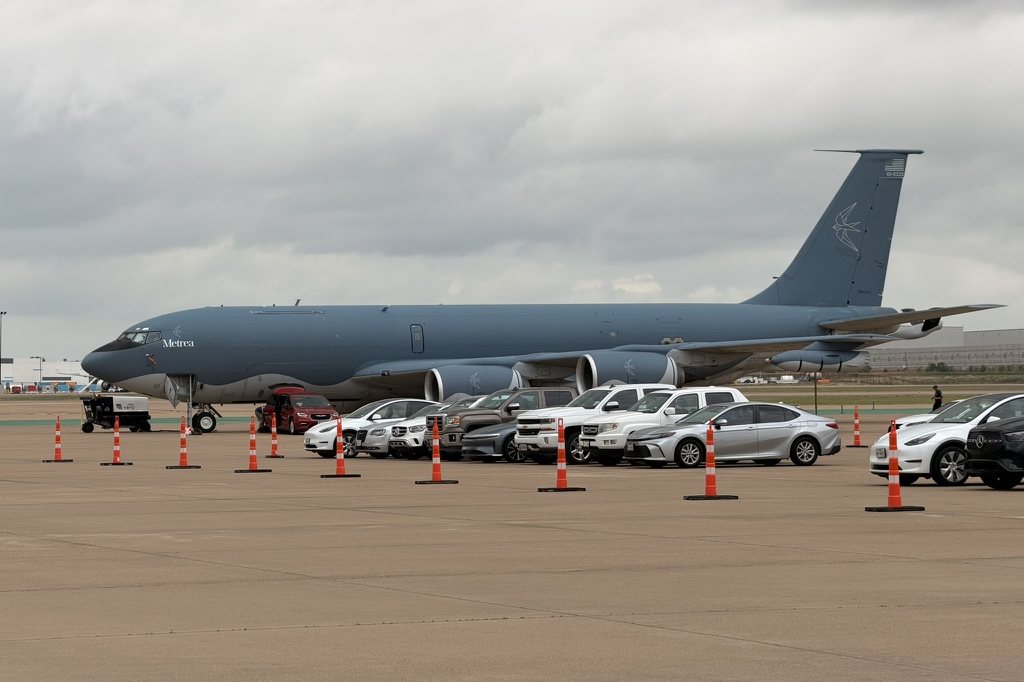
What matters is not the travel. It is what the travel keeps proving. The same failures turn up in a school, a hospital, an arena and a federal building, across different states, different years and different people in the room. Evil does not discriminate, and neither does the pattern. That is also the hopeful part, because a pattern that repeats is a pattern that can be learned, taught and interrupted.
What the record actually shows
Three findings hold across the documented cases, and they are the foundation of the P.R.O. Model™, which stands for Prevention, Response, Options. The U.S. Department of Justice selected it as “A” national standard for active shooter prevention, first for the 2022–2025 cycle and again for 2026–2030. The P.R.O. Model™ is also in use at some installations and commands across the Department of Defense.
| Finding | What it means in practice |
|---|---|
| There is a planning period | Attacks are prepared, not triggered. The window is measured in weeks and months a |
| Someone usually knew something | Concern is frequently noticed. It is far less frequently routed anywhere useful |
| Response time is the wrong scoreboard | Measuring minutes accepts the attack. Prevention measures the attacks that never start b |
Source: ASPP™ analysis of publicly documented incidents and after-action reporting.
a Planning length varies by case and is not fixed. It is a window, not a rule.
b A prevented attack produces no incident record, so this measure is inferred rather than counted directly.
How we write about incidents
We name incidents, locations and dates, because those are public record and doctrinally necessary. We do not name victims and we do not name attackers. Naming the person who did it hands them the thing many of them wanted, and naming the people it happened to costs a family something and buys the reader nothing. Collective framing carries the lesson perfectly well.
Incident analysis
- Columbine 27 Years Later
- Annunciation Catholic School Shooting
- Active Threat Prevention in the Wake of Lewiston, Maine
- Allen Texas Mall Shooting: A Call for Unity in Preventing Future Tragedies
- Reflecting on the Shooting at Beyond Wonderland Festival
- Denver Nuggets Celebration Marred by Tragic Mass Shooting
- High School Shooting Teams
Prevention, and why it works
- Preventing Targeted Violence Works
- The P.R.O. Model™: A Comprehensive Approach to Active Shooter Prevention
- The P.R.O. Model™ Explained
- Transforming Active Shooter Prevention
- Rethinking Active Shooter Solutions: What Are We Doing Wrong?
- Be Prepared, Not Scared: Our Approach to Active Shooter and Domestic Threats
- Investigation, Intelligence and Response
- Collaborative Wisdom: The New Frontier in Active Shooter Prevention
- Addressing the Culture of Violence: A Call for Change
- Preventing Gun Violence in America
- Empowering Safety: A New Approach to Active Shooter Prevention
- Empowering Safer Communities
Schools
- Preventing School Attacks Using a Proactive Mindset
- How Do We Stop These School Shootings?
- The Impact of Active Shooter Drills in Schools
- Small Investment Could Help Save Lives
- Where School Safety Budgets Go, and Where the Risk Actually Lives
- Surviving an Active Shooter Situation in Schools
Workplace, healthcare and soft targets
- Workplace Violence Safety Solutions
- The Unhealthy State of Violence in the Healthcare Industry
- Soft Targets at Risk
- Surviving a Knife Attack

Response, technology and aftermath
- How Police Are Trained to Handle Active Shooter Situations
- How to Respond to an Active Shooter
- A Populated Run, Hide, Fight
- Active Shooter Preparedness for Everyday People
- Equipping Communities for Active Shooter Response
- Consequence Management: The Vital Step After an Incident
- Crisis Management Technology Across Sectors
- Bridging the Response Delay with Drone Technology
- Innovations for Preventing Active Shooter Situations
- Lessons from Fire Safety for Modern Security

Working with ASPP™
- Executive Leadership Briefings
- Policy and Procedure Development
- Expert Witness and Consulting Services
- The Importance of a Full Approach to Prevention
- A Candid Conversation on Prevention and Preparedness
- Speaking on Prevention at the World Police Summit, Dubai
- Glenn Norling Joins ASPP
- Scott Hyderkhan Joins the ASPP Team
- Embrace the Gift of Preparedness
#NEVERHERE™ is the destination. The P.R.O. Model™ is how we get there.
The P.R.O. Model™ · P.R.O. Model™ Workshops · Request a consultation
Related ASPP Services
- Training, Assessments and Workshops. Assessment, workshop and training delivery built on the P.R.O. Model™.
- Weapons Detection Technology. Detection, mapping and screening technology, including the Blue Grass Army Depot deployment.
- The Community of Experts. The subject matter experts who support ASPP engagements.
- Mission, Standards and Why We Do This. Who we are, the standards we hold, and why prevention comes first.
Further Reading
- Preparedness Built In. Why the time gap cannot be bridged by response alone.
- Prevention vs Response. What your organization is actually choosing between.