
April 20, 2026 · Columbine Anniversary · aspppro.com · #NEVERHERE™
What is the legacy of Columbine for active shooter prevention?
April 20, 1999 changed how America understands, prepares for, and responds to active shooter events. Columbine was not the first mass casualty attack in a public space but it introduced coordinated planning, improvised explosive devices, and a response timeline that exposed a critical gap between the first shot and the end of the incident. That gap drove doctrine. It drove training. And it drives the prevention mission of Active Shooter Prevention Project, LLC every day. The PRO Model™ exists because of what Columbine taught us and because every life lost carries a responsibility forward and the destination is #NEVERHERE™.
By Chris Grollnek ·
Nation’s Leading Active Shooter Prevention Expert ·
Founder, Active Shooter Prevention Project, LLC ·
aspppro.com ·
chrisgrollnek.com ·
April 20, 2026
April 20, 1999.
Twenty-seven years ago today, two students walked into Columbine High School in Littleton, Colorado, and carried out an attack that changed the way America understands, prepares for, and responds to violence in public spaces. Thirteen people were killed. Twenty-one more were injured. The event lasted approximately 45 minutes from the first shot to the end of the incident, and that timeline became a benchmark not of success, but of the gap we had not yet closed.
I want to be clear about something before anything else: Columbine was not the first. It is important to honor the full history, because understanding what came before is part of understanding what has to change.
University of Texas Tower Shooting – August 1, 1966
Charles Whitman opened fire from the observation deck of the University of Texas Tower in Austin. Fourteen people killed, thirty-one wounded. One of the first mass casualty sniper attacks in American history — and the event that began reshaping law enforcement doctrine around active threat response.
San Ysidro McDonald’s Massacre – July 18, 1984
Twenty-one people killed, nineteen wounded at a McDonald’s restaurant in San Ysidro, California. At the time, the deadliest mass shooting by a single gunman in United States history. It exposed how unprepared public spaces were and how long a gap could exist between threat and resolution.
Luby’s Shooting – October 16, 1991
Twenty-three people killed, twenty-seven wounded in Killeen, Texas at the time the deadliest mass shooting in United States history. A cafeteria full of people having lunch. The attack lasted approximately ten minutes. It drove significant changes in concealed carry law in Texas and continued the national conversation about public space vulnerability.
Thurston High School Shooting – May 21, 1998
Less than one year before Columbine. Two students killed, twenty-five wounded at Thurston High School in Springfield, Oregon. The warning signs were present. The threat assessment infrastructure was not. The prevention opportunity was missed.
Columbine High School – April 20, 1999
Thirteen killed. Twenty-one wounded. Two coordinated participants. A planned attack involving improvised explosive devices that, thankfully, did not detonate as intended. Approximately 45 minutes from first shot to end of incident. The event that changed doctrine, training, and the national understanding of what an active shooter event looks like and what it demands in response.
What Columbine Changed And What It Did Not
Columbine marked a shift not because it was the first, but because of what it introduced. Two coordinated participants. Pre-attack planning was documented and later discovered. The attempted use of improvised explosive devices inside the school. And a response timeline approximately 45 minutes that exposed a gap the country had not yet reckoned with.
Those 45 minutes became a benchmark. Not a measure of law enforcement failure the response to Columbine was, in many ways, unprecedented in its scale and coordination for the time. It became a benchmark because it revealed something the country needed to understand: that response alone is never enough. That by the time the response activates, the damage is already being done. That is the only answer to closing the gap: moving the conversation and the infrastructure left of the event entirely.
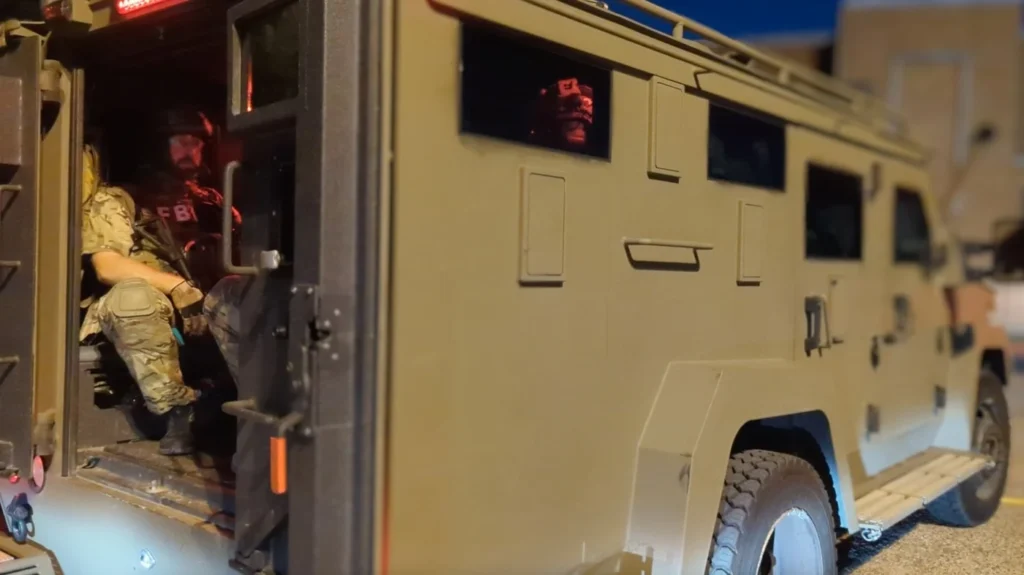
Response doctrine changed after Columbine. The mission of Active Shooter Prevention Project, LLC is to build the prevention infrastructure that makes response unnecessary. aspppro.com · #NEVERHERE™
What Columbine did not change, not immediately, not sufficiently, was the priority given to prevention. The decade that followed Columbine produced significant advances in law enforcement response doctrine. Active shooter training became standard. Run. Hide. Fight. became a household phrase. School lockdown drills became a routine part of childhood in America.
But the behavioral warning signs that preceded Columbine, the statements made, the plans written, the signals sent, were present before the attack. The prevention infrastructure to intercept them was not in place.
That is the lesson Columbine carries forward: not that the response was inadequate, but that prevention was absent.
“The 45-minute response timeline at Columbine was not a failure of response. It was proof that response alone is never the answer. The only way to close the gap is to move the work left into prevention, before the first shot is ever fired.”
~ Chris Grollnek | Active Shooter Prevention Project, LLC |
aspppro.com |
chrisgrollnek.com
Every Life Lost Carries a Responsibility Forward
I study these events because I have to. Not because it is comfortable, it never is, but because every incident that has already happened contains the intelligence needed to prevent the next one. The warning signs, behavioral patterns, missed reports, and the prevention opportunities that existed and were not acted upon.
The University of Texas Tower shooting in 1966 showed us that a single determined attacker could hold an entire community hostage for hours. San Ysidro in 1984 showed us that a public space filled with civilians offered no protection in and of itself. Luby’s in 1991 showed us that ten minutes is enough to end twenty-three lives. Thurston, in 1998, showed that warning signs were present, but the infrastructure to act on them was not. Columbine in 1999 showed us that coordination, planning, and the intent to maximize casualties could exist within a school, and that behavioral indicators were present before the attack began.
Each of those events carries a lesson. Each of those lessons is part of the PRO Model™. Prevention. Response. Options. In that order, because the goal is always to make Response and Options unnecessary, the goal is always #NEVERHERE™.
I have been doing this work since 2010, when I walked out of a real-time active shooter event in McKinney, Texas, and understood immediately that what I had survived should never have been survivable, but it should have been prevented. That morning redirected everything in my postgraduate studies, my career, and the mission that has not stopped since.
Twenty-seven years after Columbine, the prevention infrastructure to intercept threats before they become incidents exists. The behavioral threat assessment tools exist. The anonymous reporting platforms exist. The technology that detects firearms before entry exists. The national standard the PRO Model™, selected by the U.S. Department of Justice in 2022 and again in 2026 exists.
What is still missing is the will in enough organizations, schools, and communities to build it before something happens rather than after.
That is what today is about, that is what the memory of Columbine demands of us.
April 20, 1999 — April 20, 2026
“Today, we remember. Today, we honor. Today, we commit.
I will never forget.
We are all on the road to Destination #NEVERHERE™.”
~ Chris Grollnek | Active Shooter Prevention Project, LLC
aspppro.com ·
chrisgrollnek.com
The Answer Is Prevention. It Always Has Been.
#NEVERHERE™ is the destination where active shooter violence is prevented before it starts. It is not a slogan. It is a measurable outcome documented three times in real organizations, with real threats intercepted before anyone was harmed. A manufacturing facility, a corporate environment, and a service company. Three times the PRO Model™ prevention infrastructure caught the warning sign, activated the right response, and stopped the threat before it became an incident.
Those three outcomes are the answer to the question Columbine has been asking for 27 years. Not how do we respond faster, but how do we prevent it from happening at all?
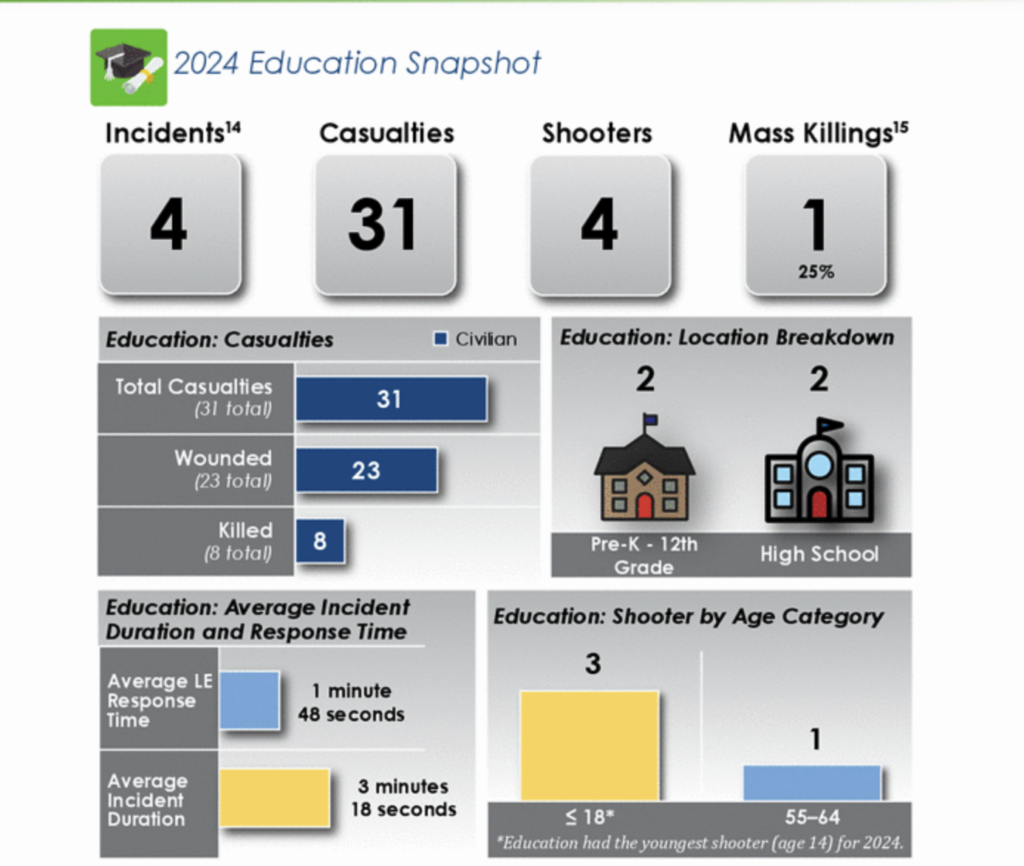
2024 Education Snapshot active shooter incidents in educational settings · aspppro.com · PRO Model™ · #NEVERHERE™
If your organization has not yet built the prevention infrastructure, the behavioral threat assessment capability, the anonymous reporting culture, the trained leadership, the site-specific technology prescription, today is the day to start. Not because of the calendar date, but because of the lives that depend on the decision being made before something happens, not after.
The conversation is free, and the assessment tells you where you stand. The PRO Model™ builds from there, and the goal, always, is the same.
#NEVERHERE™
“Twenty-seven years after Columbine, the prevention infrastructure exists. The national standard exists. The documented saves exist. What is still missing is the will to build it before something happens. Today is the day to decide.”
~ Chris Grollnek | Active Shooter Prevention Project, LLC |
aspppro.com
The Road to #NEVERHERE™ — Continue Reading
Prevention Always Beats Response
History Cannot Be Ignored
Prevention Proven Three Times
What Families Deserve Now
Law Enforcement Prevent First
#NEVERHERE — A National Movement
Destination #NEVERHERE™ — The Full Story
Chris Grollnek — Active Shooter Expert — chrisgrollnek.com
Active Shooter Prevention Project, LLC · aspppro.com
Honor the Memory.
Build the Prevention.
The most meaningful tribute to every life lost in Columbine and in every attack before and since is building the prevention infrastructure that stops the next one. The PRO Model™ is the only “A” National Standard selected by the DOJ twice. Three documented saves. Available to every organization ready to build #NEVERHERE™.
aspppro.com · chrisgrollnek.com · #NEVERHERE™
Frequently Asked Questions – Columbine and Active Shooter Prevention
Was Columbine the first school shooting in the United States?
No. Columbine was not the first school shooting, nor the first mass casualty attack in a public space in American history. The University of Texas Tower shooting in 1966, the San Ysidro McDonald’s massacre in 1984, the Luby’s shooting in 1991, and the Thurston High School shooting in 1998 all preceded it and, in some cases, produced higher casualty counts. What Columbine introduced was coordination between two participants, the attempted use of improvised explosive devices, and a level of pre-attack planning that permanently changed how threat assessment professionals understand and evaluate risk. It also exposed a 45-minute response gap that drove significant changes in law enforcement doctrine and active shooter response training.
What did Columbine change about active shooter response?
Columbine fundamentally changed the doctrine of law enforcement response. Prior to Columbine, standard protocol called for establishing a perimeter and waiting for specialized units to arrive. The approximately 45-minute timeline at Columbine demonstrated the cost of that approach when lives were actively being lost inside the building. In the years that followed, the active shooter response doctrine shifted toward immediate action, with law enforcement entering the threat environment without waiting for backup, aiming to stop the threat as quickly as possible. It also accelerated the development of behavioral threat assessment as a discipline, as post-incident analysis revealed that warning signs had been present before the attack.
What warning signs existed before Columbine that were missed?
Post-incident analysis of the Columbine attack documented that both attackers had expressed their intent through written materials, online content, and direct statements to peers. The behavioral warning signs, expressions of grievance, detailed planning, statements of intent, social isolation, and escalating behavior, were present in the period before the attack. The infrastructure to systematically collect, assess, and act on those warning signs did not exist as it does today. This is precisely why behavioral threat assessment capability and anonymous reporting culture are the foundational Prevention layer of the PRO Model™. The warning signs are almost always present. The question is whether the infrastructure to intercept them is in place. Contact aspppro.com/contact-us to assess your organization’s prevention infrastructure today.
What is the PRO Model™, and how does it address what Columbine exposed?
The PRO Model™ Prevention. Response. Options. is the direct answer to the gap Columbine exposed. Prevention comes first because the goal is always to intercept the threat before it ever reaches the physical environment. The behavioral threat assessment capability, the anonymous reporting culture, and the trained leadership that make up the Prevention layer are the infrastructure that catch the warning signs present at Columbine and in so many events before and since. Response and Options address what happens when Prevention is not sufficient. The PRO Model™ has been selected by the U.S. Department of Justice in 2022 and again in 2026, the only organization selected twice, and has been utilized across many U.S. Department of Defense installations. Three documented saves prove the Prevention layer works. Learn more at aspppro.com/p-r-o-model-workshops.
How do we honor the victims of Columbine and every attack since?
The most meaningful tribute is prevention. Not a moment of silence alone, though, that matters, but the decision to build the infrastructure that stops the next one. Every organization that implements behavioral threat assessment capability, builds an anonymous reporting culture, trains its leadership, and deploys the right technology inside a genuine prevention program is honoring every life lost by ensuring fewer lives are lost tomorrow. That is what #NEVERHERE™ means: it is not a slogan, but a commitment. Contact Active Shooter Prevention Project, LLC at aspppro.com/contact-us or visit chrisgrollnek.com to start building today.
PRO Model™ and #NEVERHERE™ are trademarks of Active Shooter Prevention Project, LLC. All rights reserved.
© Active Shooter Prevention Project, LLC ·
aspppro.com ·
chrisgrollnek.com
Historical event information reflects publicly documented and verified records. Casualty figures are drawn from established historical sources. This content is educational in nature and published in the public interest. All content is written with respect for the victims, survivors, and families of every event referenced.
Share this article

Written by : Chris Grollnek
Active Shooter Expert Chris Grollnek (#activeshooterexpert) is a highly sought-after international public speaker, trainer, educator, writer, and director and has appeared in numerous documentaries. Active Shooter Expert Chris Grollnek also provides specialized consulting services to Fortune 500 companies and special events. Grollnek has testified about the Terrorism and Counterterrorism training needs of the United States and beyond before the U.S. Senate Ways and Means subcommittees in the Hart Senate office building in 2002. Leading up to his testimony before the U.S. Senate, Chris Grollnek was invited by the Center for Strategic and International Studies (CSIS) in Washington D.C. to provide insight to Ph.D. and Senior Executives Staff of the U.S. Government on subterranean training, complex curriculum development, and public lectures.
Latest articles
April 22, 2026
April 22, 2026
April 22, 2026
