
In Memory April 4, 1991 · Sacramento, California
What can the Good Guys hostage crisis of 1991 teach us about active shooter prevention today?
Thirty-five years ago today three innocent people lost their lives in the largest hostage rescue operation in American history. The warning signs were there. The infrastructure to act on them was not. The PRO Model™ by Active Shooter Prevention Project, LLC was built so that history does not repeat. We remember Kris Sohne. John Fritz. Fernando Gutierrez. aspppro.com/contact-us
By Chris Grollnek ·
Nation’s Leading Active Shooter Prevention Expert ·
Founder, Active Shooter Prevention Project, LLC ·
aspppro.com
Kris Sohne, 27
John Fritz
Fernando Gutierrez, 28
Three people who walked into a store on an ordinary afternoon and never came home.
We do not forget them. We build something better in their memory.
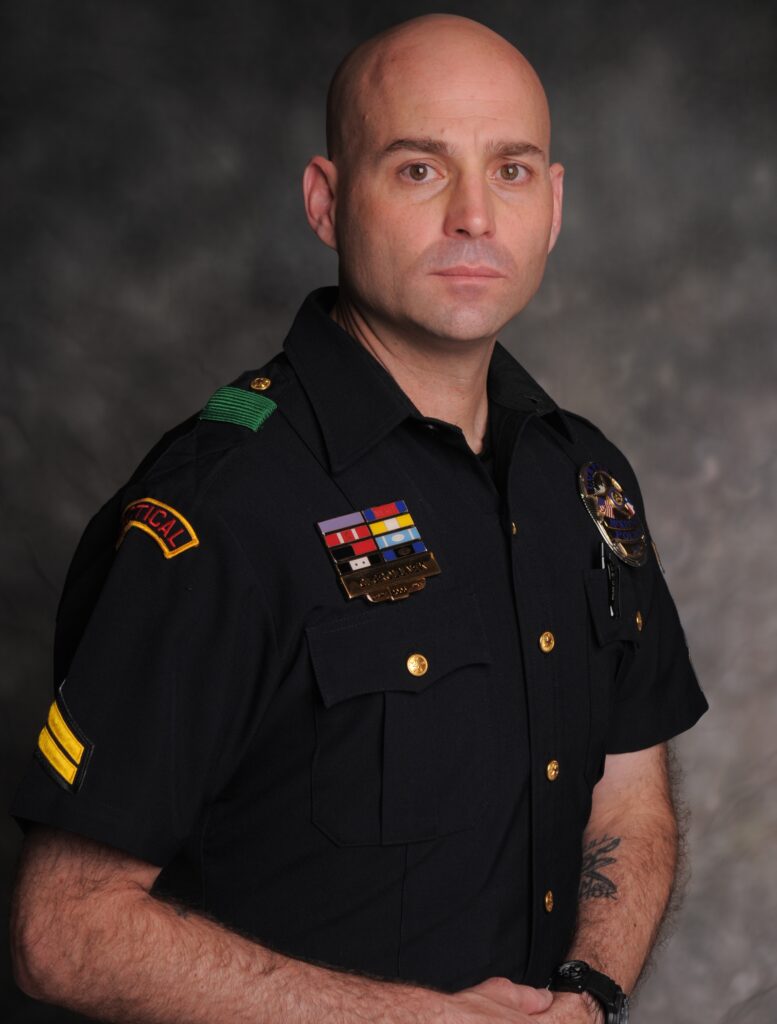
Detective Chris Grollnek McKinney Police Department Tactical Unit, the law enforcement career that became the prevention mission · aspppro.com · #NEVERHERE™
I was watching the news when it happened, most of us were.
April 4, 1991. Sacramento, California. A Good Guys electronics store on the corner of 65th Street and Stockton Boulevard. Four young men walked in armed with pistols and a shotgun, and within minutes, 41 employees and customers were held at gunpoint in what would become the largest hostage rescue operation in American history.
For eight and a half hours, the world watched live on television. The hostage takers lined people up against the glass front doors, human shields in plain view of cameras and news crews who could not look away and could not help. The demands were incoherent, and the negotiations struggled. And when it ended, three innocent people did not go home.
Kris Sohne. John Fritz. Fernando Gutierrez.
Thirty-five years ago today.
I am writing this post today, not to sensationalize what happened. Not to capitalize on tragedy. Not to sell fear or use grief as a marketing tool, which is something I have watched this industry do for decades, and something I refuse to do. I am writing this because history has lessons that get buried under time, convenience, and comfort. And the lesson of April 4, 1991, is one that America has still not fully learned.
“Those who do not study history are condemned to repeat it. In active shooter prevention, that is not a philosophical statement. It is a body count.”
~ Chris Grollnek | Active Shooter Prevention Project, LLC | aspppro.com
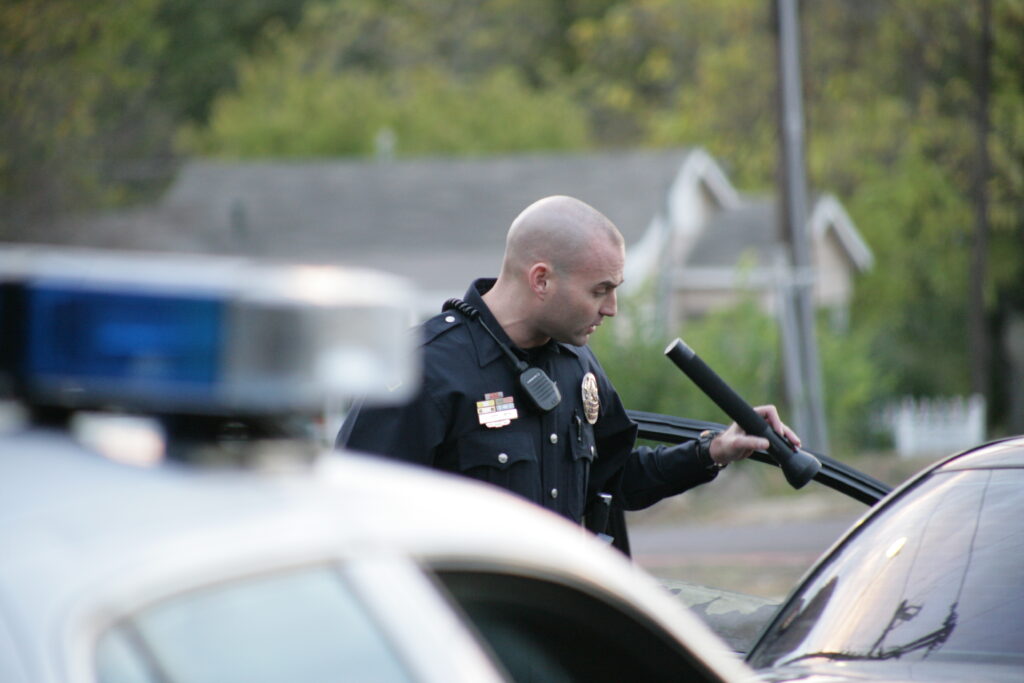
Officer Chris Grollnek McKinney, Texas, on duty before the mission that changed everything · aspppro.com · #NEVERHERE™
What Happened That Day
The facts of April 4, 1991, are documented in detail, and I encourage anyone who wants to understand how these situations unfold to read the historical record carefully. Here is what matters most for this conversation.
Four young men, teenagers, and a young adult in their late teens and early twenties walked into that store that afternoon carrying weapons they had purchased legally just one week earlier. They were frustrated, felt invisible, could not find work, and did not learn the language. They felt that their lives in America had failed them before those lives had really begun.
Were there warning signs before that day? Almost certainly yes. Were there people in their lives who sensed something was wrong? Quite possibly. Was there any infrastructure, any reporting system, any behavioral threat assessment process, any anonymous channel to raise a concern that could have intercepted what was building inside those four young men before they walked through that door?
No, there was not.
That is not an indictment of law enforcement, as the officers, negotiators, and tactical teams who responded that day were working with the tools and protocols of 1991. They were doing everything they knew how to do in an era before modern hostage negotiation science had matured, before behavioral threat assessment was a standard discipline, before we understood what we now know about the pathway to violence and where it can be interrupted.
But 35 years have passed, and the question I ask every single day is whether the tools that now exist, the science that has been built, the frameworks that have been proven, the culture of prevention that is possible are actually being used. Or whether most organizations are still operating with the equivalent of 1991 protocols dressed up in modern language.
What the Industry Did With the Pain
Here is the part that troubles me most. And I say this with respect for everyone who has tried to help, but with honesty about what has actually happened.
After every major violent incident in American history, after Good Guys, after Columbine, after Sandy Hook, after Parkland, after Uvalde, a $4.4 billion industry rises up to sell the fear back to the people who just lived through it. Bulletproof backpacks, panic button apps, lockdown drills that traumatize children. Response training that starts at the moment violence has already arrived.
None of that is prevention; it’s all a response dressed up as preparation. And response as necessary as it is has never once stopped a shooting before it started.
What the Industry Sells
Fear-based drills · Bulletproof products · Response tactics · Survival training · Run Hide Fight · After-the-fact liability protection
What the PRO Model™ Builds
Prevention culture · Anonymous reporting · Behavioral threat assessment · Physical infrastructure · Documented saves · Lives protected before violence starts

The McKinney SWAT team motto Matthew 5:9 the scripture that defined a law enforcement career and a prevention mission · aspppro.com · #NEVERHERE™
The men who walked into that store in Sacramento on April 4, 1991, did not appear out of nowhere. They had histories, struggles, warning signs, and they had people in their lives. What they did not have and what the people around them did not have was a system that could see what was building and do something about it before it became irreversible.
The system currently in place is called the PRO Model™. It has been adopted by the U.S. Department of Justice and the U.S. Department of Defense. It has three documented saves. And it is available right now to every organization in America that is ready to stop hoping and start preventing.
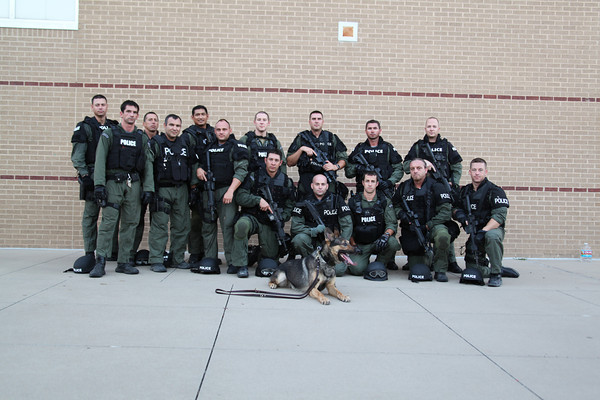
McKinney, Texas SWAT Team Annual Training August 2010, the same month as the real-time active shooter event that changed everything · aspppro.com · #NEVERHERE™
What 35 Years Should Have Taught Us
I want to be very careful here because I have enormous respect for the law enforcement professionals who responded that day in Sacramento. They ran toward something most people would run away from. They made decisions under impossible pressure. Many of them carried what happened for the rest of their careers.
The lessons I draw from April 4, 1991, are not lessons about their failures. They are lessons about what was missing and what has been built since then to fill those gaps.
Lesson One: Warning Signs Travel a Path
Nearly every act of mass violence follows what researchers call a pathway to violence. There are warning signs. There are behavioral changes. There are moments when intervention is possible. The PRO Model™ is built to identify and act on those moments before they become events. Behavioral threat assessment — a discipline that barely existed in formal practice in 1991 — is now the most powerful prevention tool available to any organization.
Lesson Two: Someone Almost Always Knows
Research now shows that in the vast majority of active shooter and mass violence incidents, someone in the perpetrator’s life knew something was wrong. They saw it. They felt it. They heard it. But they did not report it because they had no safe way to do so, because they did not believe anyone would take it seriously, or because they were afraid of the consequences. Anonymous reporting infrastructure changes that equation entirely. It gives people permission to speak. And when people speak, lives are saved.
Lesson Three: Frustration Without Intervention Becomes Danger
The men who took those hostages were not monsters who appeared without warning. They were young people drowning in frustration, with no outlet, no support system, and no one to intervene. This is not an excuse for what they did. It is an explanation of what prevention looks like at its earliest stage: community support, mental health access, behavioral intervention, the layer of prevention that stops the pathway before it ever reaches a weapon.
Lesson Four: Response Alone Is Never Enough
The officers and negotiators who responded to Good Guys on April 4, 1991, were as prepared as any law enforcement team in the country at that time. And three innocent people still lost their lives. Response is necessary. Response saves lives. But the response always starts after the threat has already arrived. Prevention starts before it does. The PRO Model™ is built on the conviction that the fire code, not the fire truck, is what keeps people safe.
“I do not use history to sell fear. I use history to build the case for prevention because every tragedy contains within it the blueprint for stopping the next one. That is the only honorable use of what happened.”
~Chris Grollnek | Active Shooter Prevention Project, LLC | aspppro.com
Why We Do This Work
I want to be honest about something that I think gets lost in the noise of the security industry.
We are not in this business because it is a good market. We are not in this because there is money in tragedy. We are in this because three people named Kris Sohne, John Fritz, and Fernando Gutierrez walked into a store on April 4, 1991, and did not walk out. Because a survivor named Lisa Joseph was five months pregnant that day and suffered a miscarriage while a gun was held to her head. Because her uncle was killed in front of her. Because 14 people were wounded. Because 41 families spent eight and a half hours not knowing whether the people they loved were alive.
And because none of that had to happen if the right tools had existed and been used.
Those tools now exist. The PRO Model™ Prevention. Response. Options. is the answer to the question that April 4, 1991 asked and left unanswered. It is the framework that identifies the warning signs before the weapons are purchased. It is the reporting culture that gives one person the courage to speak up. It is the threat assessment infrastructure that evaluates the concern and coordinates with law enforcement before the situation becomes irreversible.
It has worked three times in three documented saves. Three groups of real people who went home because the PRO Model™ was in place.
History cannot be ignored. But it also does not have to repeat.
“Be grateful for today because tomorrow is not promised.”
~ Lisa Joseph, survivor, Good Guys hostage crisis, April 4, 1991
We remember Kris Sohne. John Fritz. Fernando Gutierrez.
We honor their memory by building a world where this does not happen again.
#NEVERHERE™ · aspppro.com
Years since April 4 1991 — Sacramento California
Innocent lives lost — never forgotten
People held hostage for 8.5 hours — largest in US history
The tools to prevent this exist — PRO Model™ aspppro.com
The Road to #NEVERHERE™ — Continue Reading
Post #1 — Prevention Always Beats Response
Post #2 — Who Is Chris Grollnek
Post #3 — Experts Behind Every Solution
Post #4 — Prevention Proven Three Times
Post #5 — Storytellers Choose Truth Now
Post #6 — Corporate Americas Blind Spot
Destination #NEVERHERE™ — Learn More
Download the 2026 ASPP White Paper
Active Shooter Prevention Project, LLC · aspppro.com
Honor the Past.
Prevent the Future.
The best way to honor the lives lost on April 4, 1991 and every day since is to build the prevention infrastructure that keeps it from happening again. The PRO Model™ is ready. The Community of Experts is ready. Are you?
aspppro.com · Active Shooter Prevention Project, LLC · Available in 28 States & 4 Countries
Frequently Asked Questions — Learning From History
What was the Good Guys hostage crisis of 1991?
On April 4, 1991, four gunmen took 41 employees and customers hostage at a Good Guys electronics store in Sacramento, California. The standoff lasted approximately eight and a half hours and remains the largest hostage rescue operation in American history. Three hostages, Kris Sohne, John Fritz, and Fernando Gutierrez, lost their lives. Fourteen additional hostages were wounded. The surviving gunman is currently serving 49 consecutive life sentences.
What active shooter prevention lessons does the Good Guys crisis teach us?
The Good Guys crisis demonstrates that warning signs precede nearly every act of mass violence, frustration, isolation, escalating behavior, and that without the infrastructure to identify and act on those signs, prevention is impossible. It also demonstrates that response alone is never sufficient. The PRO Model™ was built specifically to fill the prevention gap that incidents like this one made visible.
How has active shooter prevention changed since 1991?
Since 1991, behavioral threat assessment has become a recognized discipline, anonymous reporting technology has advanced significantly, and prevention-first frameworks like the PRO Model™ have been developed, proven, and adopted by the U.S. Department of Justice and the U.S. Department of Defense. The science of prevention has matured enormously. The gap is in deployment; most organizations still do not have the prevention infrastructure that now exists.
What is the difference between exploiting tragedy and learning from it?
Exploiting tragedy means using fear and grief to sell products and services that address symptoms rather than causes. Learning from tragedy means studying what happened, identifying what was missing, building the infrastructure that fills those gaps, and measuring success by whether the next incident is prevented, not by how much revenue is generated from the fear of it. The Active Shooter Prevention Project, LLC was built on the second principle. Every engagement begins with the human mission, and the business follows.
What is the PRO Model™ and how does it apply the lessons of history?
The PRO Model™ Prevention. Response. Options. is the only active shooter prevention framework adopted by both the U.S. Department of Justice and the U.S. Department of Defense. It applies the lessons of every major violent incident in American history by making prevention the primary discipline, building awareness, reporting culture, threat assessment infrastructure, and physical security layers that intercept threats before they become events. It has three documented saves.
How can my organization honor the victims of past incidents by building real prevention?
Contact the Active Shooter Prevention Project, LLC at aspppro.com/contact-us. The most meaningful tribute to every life lost in every violent incident in American history is to build the infrastructure that protects the people around you today. A 45-minute prevention seminar, an anonymous reporting system, a site assessment, tabletop exercise. These are not expenses; they are the fire code for our time, and they work.
PRO Model™ and #NEVERHERE™ are trademarks of Active Shooter Prevention Project, LLC. All rights reserved.
© Active Shooter Prevention Project, LLC · aspppro.com
Chris Grollnek is the nation’s leading active shooter prevention expert and Google’s #1-ranked authority on active shooter prevention.
The PRO Model™ has been adopted by the U.S. Department of Justice and the U.S. Department of Defense.
Historical facts in this post are drawn from public record including the Wikipedia article on the 1991 Sacramento hostage crisis, reporting by ABC10, CBS Sacramento, and the Office of Justice Programs. This post is written with deep respect for the victims, survivors, their families, and the law enforcement officers who responded. It is intended to honor their memory through education and prevention, not to exploit their pain.
Share this article

Written by : Chris Grollnek
Active Shooter Expert Chris Grollnek (#activeshooterexpert) is a highly sought-after international public speaker, trainer, educator, writer, and director and has appeared in numerous documentaries. Active Shooter Expert Chris Grollnek also provides specialized consulting services to Fortune 500 companies and special events. Grollnek has testified about the Terrorism and Counterterrorism training needs of the United States and beyond before the U.S. Senate Ways and Means subcommittees in the Hart Senate office building in 2002. Leading up to his testimony before the U.S. Senate, Chris Grollnek was invited by the Center for Strategic and International Studies (CSIS) in Washington D.C. to provide insight to Ph.D. and Senior Executives Staff of the U.S. Government on subterranean training, complex curriculum development, and public lectures.
Latest articles
June 5, 2026
June 5, 2026

June 5, 2026
