
Active Shooter Prevention for Families · Last Updated April 2026 · aspppro.com
What do families deserve from active shooter prevention?
Families deserve more than drills that teach children to hide. They deserve schools, workplaces, and communities that have built the prevention infrastructure to intercept threats before they become events. The PRO Model™ by Active Shooter Prevention Project, LLC Prevention. Response. Options. builds the behavioral threat assessment capability, anonymous reporting culture, and physical security layers that protect families before anything happens. Three documented saves prove it works. aspppro.com/contact-us
By Chris Grollnek ·
Nation’s Leading Active Shooter Prevention Expert ·
Founder, Active Shooter Prevention Project, LLC ·
aspppro.com ·
Last updated April 2026
Every parent sending a child to school this morning did something they hoped they would never have to think about.
They hoped that today would not be the day. That their child’s school had done the work. That someone, somewhere in that building, had built something more than a lockdown drill and a laminated card on the wall.
Families deserve better than hope as a safety strategy. They deserve prevention. Not the performance of it, the actual infrastructure. The behavioral threat assessment program that catches warning signs before they become plans. The anonymous reporting culture, where a student who hears something wrong has a way to report it without fear. The physical security layers that make the building harder to reach than the threat is prepared for.
That is what the PRO Model™ builds. And that is what every family in America, in every school, every community, every workplace deserves right now.
“Families deserve more than hope as a safety strategy. They deserve the prevention infrastructure that intercepts threats before their children ever need to use it.”
~ Chris Grollnek | Active Shooter Prevention Project, LLC | aspppro.com
What We Are Asking Children to Do
Ninety-five percent of public schools in America conduct active shooter drills. Children as young as five years old practice hiding in corners, staying quiet, waiting for sounds to stop. They practice this not because it is developmentally appropriate or psychologically sound, but because the adults responsible for protecting them chose response over prevention, and this is what response looks like when prevention was never built.
The research is unambiguous. A 2020 study analyzing more than 54 million social media posts before and after active shooter drills found that anxiety, stress, and depression increased by 39 to 42 percent following the drills. Words like hope, love, home, kids, and community appeared more frequently in the 90 days after a drill, not as expressions of comfort, but as expressions of elevated anxiety. Parents posting about not wanting to normalize this. Children who started flinching at fire alarms months after the drill was over.
In August 2025, the National Academies of Sciences, Engineering, and Medicine released a report examining the mental, emotional, and behavioral impacts of active shooter drills on students and school staff. The conclusion was clear: schools must adopt trauma-informed, developmentally appropriate approaches that balance physical safety with psychological well-being. Hyperrealistic simulations have no place in schools. And critically, three-fourths of school shootings are carried out by current or former students, which means sharing the procedures with students shares them with the most likely threat population.
This is not an argument against preparation. It is an argument for prevention. The question is not whether to prepare, but whether we have built the infrastructure that makes the drill the last resort rather than the only plan.
Of US public schools conduct active shooter drills — most without prevention infrastructure behind them
Increase in anxiety, stress, and depression among children and parents following active shooter drills
PRO Model™ documented saves — real families whose people came home because prevention was in place
What Prevention Actually Looks Like for Families
Prevention does not look like a drill. It does not look like a poster. It does not look like metal detectors at the front door that make the building feel like a prison while doing nothing to stop the person who was already inside, planning something for weeks.
Prevention looks like a school where every teacher, every counselor, every administrator, every student has been trained to recognize behavioral warning signs and has a clear, safe, anonymous pathway to report them. Prevention looks like a threat assessment team that evaluates those reports and intervenes not with punishment, but with the specific, compassionate, effective action that redirects a pathway before it reaches the point of no return.
Research from Sandy Hook Promise, the organization that has been building an anonymous reporting culture in schools for years, shows that their Say Something anonymous tip line has now prevented school shootings and youth suicides through more than 328,000 tips and training reaching 31 million individuals. In 2025 alone, it intercepted its 18th credible threat. Every one of those interceptions is a family that did not get a phone call, no parent should ever receive.
That is what prevention looks like. Not the absence of preparation, but the presence of infrastructure that makes the catastrophic outcome preventable rather than just survivable.
The PRO Model™ builds that infrastructure. Prevention. Response. Options. In that order because the goal is always to make the Response and Options layers unnecessary. The goal is always #NEVERHERE™.
“Prevention does not look like a drill. It looks like a school where every person has a clear, safe pathway to say something before it is too late and where someone is ready to act on what they hear.”
~ Chris Grollnek | Active Shooter Prevention Project, LLC | aspppro.com
What Every Community Deserves
This post is not only about schools. The families reading this live in communities, and the same prevention principles that protect children in schools protect adults in workplaces, places of worship, healthcare facilities, retail stores, and every other environment where people gather.
Every community deserves a behavioral threat assessment capability, the ability to identify individuals on a pathway toward violence before that pathway reaches an endpoint. Every community deserves an anonymous reporting culture where the people closest to emerging threats have the language and the infrastructure to act on what they observe. Every community deserves physical security layers that are appropriate to the specific environment and population, not a one-size-fits-all template, but a prevention prescription tailored to real conditions and risks.
What no community deserves is to be handed a response plan and told that it is prevention. It is not. A response plan tells people what to do after the threat has arrived. Prevention is the work that means the threat never arrives in the first place.
The PRO Model™ has three documented saves that prove this distinction is not theoretical. A manufacturing facility where access control stopped an armed threat at the door. A corporate environment where an anonymous report led to an arrest before a planned attack. A service company where a reporting culture and physical security layers gave the organization time to act. Three organizations. Three outcomes where people went home because prevention was already in place.
Every community in America deserves those outcomes. Every family deserves to send their people into the world and know that the organizations responsible for their safety have done the prevention work, not just the paperwork.
What Most Organizations Offer
Lockdown drills · Run Hide Fight posters · Generic response plans · Security theater · No threat assessment · No reporting culture · Response after the threat arrives
What the PRO Model™ Builds
Behavioral threat assessment · Anonymous reporting · Prevention culture · Physical security layers · Trained leadership · Documentation · Three documented saves · #NEVERHERE™
What Parents Can Do Right Now
You do not have to wait for an incident to ask the right questions. Every parent has both the right and the responsibility to understand what their child’s school has actually built not what it says it has, but what it practices, funds, trains, and maintains.
Ask your school’s principal or safety coordinator whether they have a behavioral threat assessment team. Ask whether they have an anonymous reporting system that students actually know about and trust. Ask whether their security infrastructure was built around a site-specific assessment or whether it came from a template. Ask whether their staff have been trained to recognize behavioral warning signs, not just how to lock a door during a lockdown, but how to recognize the indicators that come weeks or months before an incident.
And if the answers reveal gaps, advocate. Show up to school board meetings. Ask the district what they are doing with their safety budget. Ask whether they have engaged a qualified prevention expert or whether they checked a compliance box with a one-day seminar.
The families who ask these questions are the families whose schools build prevention infrastructure. The communities that expect more than response training are the communities that create the conditions for #NEVERHERE™.
I have spent fifteen years fighting for exactly that. Not because I am required to. Because I walked out of a real active shooter event in 2010 and understood immediately that what I had just survived should never have been survivable, it should have been prevented. Every resource I have built, every program I have delivered, every standard I have written has been aimed at the same destination: a world where this does not happen. Where families send their people into schools and workplaces and communities, and those places have done the prevention work. Where the call that no parent should ever receive is never made.
That is #NEVERHERE™, and it is possible, right now. With the tools, the training, and the infrastructure that already exist.
“Every parent sends their child to school with the simple expectation that they return home safely. The PRO Model™ builds the infrastructure that makes that expectation something more than hope.”
~ Chris Grollnek | Active Shooter Prevention Project, LLC
#NEVERHERE™ · aspppro.com
Credible school threats intercepted by anonymous reporting through Sandy Hook Promise by 2025
Individuals trained in anonymous reporting through Say Something program
PRO Model™ documented saves — prevention worked before violence started
The time to build prevention infrastructure — not after an incident makes it impossible to ignore
The Road to #NEVERHERE™ — Continue Reading
Post #1 — Prevention Always Beats Response
Post #2 — Who Is Chris Grollnek
Post #3 — Experts Behind Every Solution
Post #4 — Prevention Proven Three Times
Post #5 — Storytellers Choose Truth Now
Post #6 — Corporate Americas Blind Spot
History Cannot Be Ignored — The Good Guys Crisis 35 Years Later
Post #7 — Healthcare Cannot Afford Reactive
Post #8 — Mandates Are Already Here
Destination #NEVERHERE™ — Learn More
Download the 2026 ASPP White Paper
Active Shooter Prevention Project, LLC · aspppro.com
Your Family Deserves Prevention.
Not Just a Response Plan.
The PRO Model™ builds the behavioral threat assessment capability, anonymous reporting culture, and physical security infrastructure that protects families before anything happens. The Community of Experts is ready to build prevention around your school, your organization, and your community. The mission is #NEVERHERE™. The time is now.
aspppro.com · Active Shooter Prevention Project, LLC · Available in 28 States & 4 Countries
Frequently Asked Questions – Active Shooter Prevention for Families
What should families know about active shooter prevention in schools?
Families should know that prevention and response are not the same thing. Most schools have response plans, lockdown procedures, drill protocols, and emergency communication systems. Far fewer have genuine prevention infrastructure: behavioral threat assessment teams, anonymous reporting systems that students trust, and staff trained to recognize warning signs weeks or months before an incident occurs. Research shows that the vast majority of school shootings had observable warning signs beforehand. The PRO Model™ is built around intercepting those warning signs before they become events. That is what families should be asking about and expecting from every institution responsible for their loved ones’ safety.
Are active shooter drills helping or harming children?
The research is nuanced but concerning. A 2020 study found that anxiety, stress, and depression among children and parents increased by 39 to 42 percent following active shooter drills. The August 2025 National Academies report recommended trauma-informed, developmentally appropriate approaches and cautioned against hyperrealistic simulations. Several states, including New York and California, have already moved to reform how drills are conducted, requiring advance notice to families, banning realistic simulations, and building in mental health support. Experts broadly agree that the answer is not to eliminate preparation but to build the prevention infrastructure that makes drills the last line rather than the only line of defense. Lockdown drills with prior notice and trauma-informed delivery are far less harmful than surprise simulations and far more effective at building genuine preparedness.
What is behavioral threat assessment, and how does it protect families?
Behavioral threat assessment is the discipline of identifying individuals who may be on a pathway toward violence based on observable behavior, communication patterns, social withdrawal, expressions of grievance, and other indicators, and intervening before that pathway reaches an irreversible point. In schools and communities, this means training staff, teachers, and community members to recognize these patterns and providing a structured process for evaluating and acting on what they observe. Sandy Hook Promise’s anonymous tip line has intercepted 18 credible threats through 328,000 tips; every interception is a prevention outcome. The PRO Model™ builds the behavioral threat assessment infrastructure that makes that kind of outcome systematic rather than occasional.
How does anonymous reporting protect children in schools and communities?
Anonymous reporting removes the most significant barrier to violence prevention, the social and personal cost of speaking up. Students and community members who observe concerning behavior frequently do not report it because they fear retaliation, social consequences, or being wrong. An anonymous reporting system that is well-publicized, trusted, and consistently acted upon changes that calculation. When people know their report will be taken seriously and acted upon without identifying them, they report. And when reports come in before a situation becomes critical, intervention is possible. The PRO Model™ builds the anonymous reporting culture, the training, the infrastructure, and the leadership commitment that makes this work in practice rather than in theory.
What questions should parents ask their child’s school about active shooter prevention?
Ask whether the school has a behavioral threat assessment team and what their process is for evaluating concerning behavior. Ask whether there is an anonymous reporting system that students know about and trust. Ask whether staff training covers behavioral warning sign recognition, not just lockdown procedures. Ask whether the school’s safety infrastructure was built from a site-specific assessment or a generic template. Ask whether the school has reviewed its safety plan with local law enforcement and whether both parties have practiced together. And ask what the school’s documented outcomes are. Have there been situations where prevention worked? The answers to those questions tell you far more about a school’s actual safety posture than any drill schedule.
How can communities build active shooter prevention infrastructure?
Communities build prevention infrastructure by making the PRO Model™ decision: to invest in prevention before an incident rather than response after one. That starts with a community assessment, an evaluation of existing safety posture across schools, workplaces, houses of worship, healthcare facilities, and other gathering places. From there, the PRO Model™ is implemented in layers: behavioral threat assessment capability, anonymous reporting culture, physical security infrastructure appropriate to each environment, and trained leadership that sustains the program over time. The goal is a community where every organization has done the prevention work, where the destination is genuinely #NEVERHERE™. Contact us at aspppro.com/contact-us to start.
Before You Hire Anyone
Questions that protect your family, your school, and your community when comparing active shooter prevention programs and vendors.
How do I know if an active shooter prevention program is actually building prevention or just selling training events?
Ask one question: how many documented saves do they have? A save is not a completed training session. A save is not a positive review. A save is a real situation that was intercepted before violence occurred, with a timeline, with specifics, and with law enforcement involvement. The Active Shooter Prevention Project, LLC has three. A manufacturing facility. A corporate environment. A service company. Real threats. Real people who went home. If an organization cannot answer that question with specifics, they are selling training events. For the families who depend on the infrastructure those programs leave behind, the difference is everything.
What should a school or community ask before hiring an active shooter prevention consultant?
Ask whether their approach is built around prevention or response. Ask whether they conduct site-specific assessments or use a template. Ask whether they build an anonymous reporting infrastructure or just train staff on the theory of it. Ask whether their training covers recognizing behavioral warning signs, the weeks and months before an incident, not just the moment it begins. Ask what infrastructure remains after the engagement ends. Ask whether they have experience working with your specific environment, such as school, community, healthcare, or corporate. And ask about their documented outcomes. The PRO Model™ was built to answer every one of those questions with specifics and evidence.
Our school already has a safety plan and does drills. Is that enough?
A safety plan and drills are the response infrastructure. They describe what to do after a threat arrives. Prevention infrastructure is different; it is the capability to identify and intercept threats before they arrive. Most schools that have drills do not have behavioral threat assessment teams. Most do not have anonymous reporting systems that students actually know about and use. Most have not conducted a site-specific assessment that identifies the vulnerabilities of their actual building and population. Having a drill schedule is not the same as having prevention. It is the starting point, not the finish line.
How can a parent advocate for better prevention in their child’s school?
Start by asking questions at the school level, the principal’s level, the safety coordinator’s level, and the school board meeting. Ask specifically about behavioral threat assessment, anonymous reporting, and whether the safety plan was built from a site-specific assessment. If those things do not exist, ask why and what the timeline is for building them. Share information, bring data from the National Academies report, from the research on anonymous reporting outcomes, and from the PRO Model™ documentation. Advocate for the school to engage a qualified prevention expert rather than a one-day seminar vendor. The communities that expect more than response training are the communities that build #NEVERHERE™ infrastructure.
Does the PRO Model™ work for schools and community organizations or only for corporations?
The PRO Model™ was designed to be tailored to any environment, which is what the Options component of Prevention. Response. Options. means in practice. The principles of behavioral threat assessment, anonymous reporting culture, and layered physical security apply whether the environment is a school, a house of worship, a healthcare facility, a retail location, or a corporate campus. The site-specific assessment process adapts the framework to the actual conditions, population, and risk profile of each unique environment. The PRO Model™ has been delivered across 28 states and 4 countries in environments of every type. The mission does not change based on the setting, only the prescription does.
Where do we start if we want to build genuine prevention for our school or community?
Start by contacting the Active Shooter Prevention Project, LLC at aspppro.com/contact-us. The first conversation is an assessment of your current state, what exists, what the gaps are, and what the most effective path to genuine prevention looks like for your specific environment. The PRO Model™ is then built in layers that are practical, sustainable, and matched to your community’s needs and capacity. You do not have to wait for a mandate. You do not have to wait for an incident. You can build prevention now because the families who depend on the infrastructure you create deserve to be protected before they ever need to use it.
PRO Model™ and #NEVERHERE™ are trademarks of Active Shooter Prevention Project, LLC. All rights reserved.
© Active Shooter Prevention Project, LLC · aspppro.com
Chris Grollnek is the nation’s leading active shooter prevention expert and Google’s #1 ranked authority on active shooter prevention.
The PRO Model™ has been adopted by the U.S. Department of Justice and the U.S. Department of Defense.
Statistics and research cited in this post are drawn from the National Academies of Sciences, Engineering, and Medicine, Sandy Hook Promise, the Centers for Disease Control and Prevention, the New England Journal of Medicine, and peer-reviewed research current as of April 2026. This content is educational in nature and is published in the public interest to support prevention-focused decision-making by families, schools, and communities.
Share this article
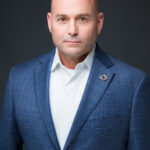
Written by : Chris Grollnek
Chris Grollnek, M.S. is the nation's leading active shooter prevention expert and Google's #1 ranked authority on the phenomenon of active shooters. A former U.S. Marine and retired police detective, Chris survived a real-time active shooter event in 2010 an experience that redirected his postgraduate studies and launched a mission that has never stopped. He is the founder of Active Shooter Prevention Project, LLC and creator of the DOJ and DOD adopted PRO Model™ Prevention. Response. Options. He has testified before the U.S. Senate and Congress, consulted for three U.S. Presidents, briefed the Under Secretary of Defense, and delivered the national active shooter prevention standard to all 115,000 U.S. Department of Justice personnel. He has been called upon by the Center for Strategic and International Studies in Washington D.C. and serves as a consultant to the Mackenzie Institute. Featured in Time Magazine, BBC, CNN, Fox News, Russia Today, France 24, and every major U.S. network. Keynote speaker at the World Police Summit in Dubai. Expert witness in Parkland and multiple federal cases. Author of the national standard. Champion of #NEVERHERE™ the destination where active shooter violence is prevented before it ever starts. aspppro.com
Latest articles
June 5, 2026
June 5, 2026

June 5, 2026
