
Preparedness Built In
Fire departments memorialized victims by building better. The P.R.O. Model™ delivers the same solution for active shooter prevention through designing an all-hazard approach that protects against every threat, from fire to active violence.
Published June 2026 | 4,500+ words | Strategic Research Brief
In 1871, the Great Chicago Fire killed 300 people and destroyed a third of the city. America’s response wasn’t more firefighters. It was fundamentally changing how every building is designed, constructed, and maintained. Fire codes. Inspections. Prevention baked in. Over 150 years, fire deaths dropped dramatically not because responders were faster, but because prevention was built into the structure itself.
Active violence has been America’s defining threat for 27 years. The FBI has documented 528 active shooter incidents from 2000-2024 claiming approximately 1,250 lives and leaving tens of thousands wounded. The incidents are accelerating: 61 in 2021, 50 in 2022, 48 in 2023. This is not an American problem alone countries with the strictest gun laws (Norway, Germany, Australia, Canada, Finland) continue to experience active violence incidents, proving that prevention isn’t about regulations, it’s about design.
We know what to do, we have a proven model the P.R.O. Model™ that shows us how to design prevention directly into buildings, from schools to Fortune 500 offices to government facilities. Preparedness, not fear is built-in solutions,no panic. We’ve waited 27 years, now we build.
27 Years of Knowing. Zero Years of Acting.
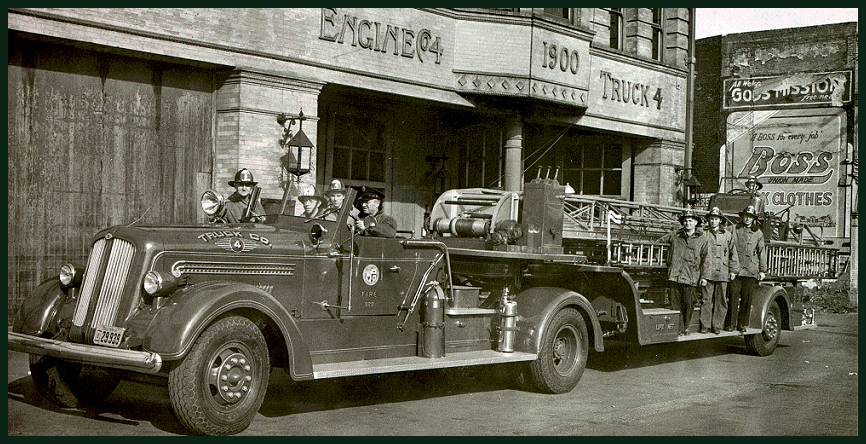
Historical fire response equipment from the early 1900s. Fire departments evolved from response-only to prevention-integrated design over 150 years.
The P.R.O. Model™ applies this same evolution to active shooter prevention today.
The warning signs came early. In 1966, in Texas, a killer climbed a university tower and killed 17 people one of the first mass shootings in modern American history to receive widespread national media coverage. In 1984, in California, a killer walked into a fast-food restaurant and fatally shot 21 people. In August 1986, in Oklahoma, a postal worker killed 14 coworkers, an incident that would spawn the term “going postal” as workplace violence became a recognizable threat. By October 1991, in Texas, a killer had driven his truck through a cafeteria, killing 23 people and wounding 20 others in what was then the deadliest mass shooting by a single killer in U.S. history.
Then came 1999 and the high school attack in Colorado, then 2007 in Virginia, 2012 in Connecticut, 2018 in Florida, 2022 in Texas, and countless others.
The brutal fact: We have documented 528 active shooter incidents in 24 years. Approximately 1,250 were killed, and thousands wounded. Police departments know what to do, but focus on response. Architects understand threat mitigation and are ready to partner with fire marshals. We made the decision to act on fire prevention codes and scaled rapidly, and it’s time for the same approach to all hazards.
It’s Not Just America. It’s a Global Inflection Point.
Here’s what changes everything: Countries with the strictest gun control laws Norway, Germany, Australia, Canada, Finland continue to experience active violence incidents. This proves that prevention isn’t about legislation or gun access. It’s about how we design and prepare our buildings.
The problem isn’t unique to America; the solution is universal: all-hazard design. Fire, Earthquakes, and other disasters taught us this. Now active violence teaches us: buildings must be designed so incidents are prevented before they start, occupants are protected during the critical window, and responders arrive with complete intelligence.
The Opportunity Waiting: Fire departments memorialized victims by changing how we build. Police departments know the same lesson, and architects are ready. The communities are demanding, and honesty deserves better. The P.R.O. Model™ is proven, but it requires someone to lead the change, and that’s everyone reading this, including you.
Fire Departments Learned, Police Departments Know But Won’t Act.
After the Chicago Fire of 1871 killed 300 people, America didn’t just buy more trucks. They memorialized those victims by doing something revolutionary: they changed how every building is designed and constructed. Fire codes were written, buildings were inspected before occupancy, and fire marshals became design partners. Over 150 years, fire deaths dropped dramatically, not because responders were faster, but because prevention was built into the structure itself.
Police departments now have the exact same opportunity, and they understand the lesson. But they’re choosing not to act.
Here’s Why: The Time Gap Is Unbridgeable
The brutal fact: Active threats typically conclude within 0-8 minutes. Police arrival time averages 12-15 minutes in 2026. That gap cannot be closed by faster cars, brighter lights, or better gear. This is a structural reality, not a police failure.
If police cannot arrive during the event itself, the solution cannot be a police response. The solution must be: (1) Preventing the incident from happening, (2) Protecting civilians inside during those 12-15 minutes, and (3) Alerting responders to exact locations and threat status in real-time.
Why Police Aren’t Acting (Even Though They Know)
Police leadership understands the lesson. But they’re choosing not to implement it. Here’s why:
- Budget constraints: Departments keep buying gear, vehicles, and equipment (tactical mindset) instead of funding architectural prevention specialists and design partnerships.
- Institutional inertia: The response-only model is familiar. Prevention-through-design requires admitting that faster response isn’t the answer, and that’s institutionally difficult.
- Tactical philosophy shift: NTOA (National Tactical Officers Association) is now using language like “doomed captives,” accepting that some occupants inside can’t be saved by police response, so focus shifts to responder safety and preventing suspect escape.
- Response standard tightening: Some states are actually clamping down on alert standards, making officers wait longer before entering, which slows response further and doesn’t save anyone.
In short: Police departments know they need prevention-through-design. They’re just choosing to keep funding what they’ve always funded. Faster response is measurable, visible, and familiar. Prevention is harder to quantify and requires partnering with architects and civilians.
The Opportunity They’re Missing: Fire departments memorialized victims by changing how we build. Police have the same opportunity right now. But instead of doing something better, they’re adding more gear to a system that can’t arrive in time anyway. The victims and the public deserve better, and so do the police themselves.
The Real Solution: Civilians Deter. Technology Communicates.
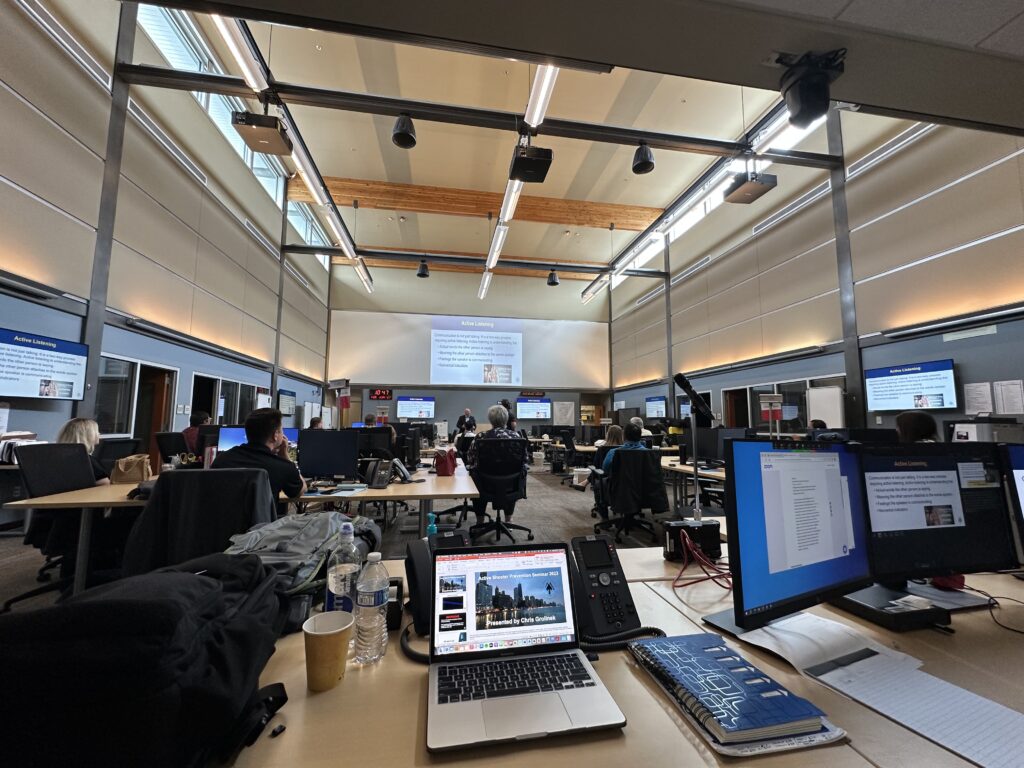
Technology that works: Emergency operations centers enable real-time occupant-to-responder communication during critical first minutes.
This is how civilians deter through architecture and respond through instant alerts—not through training to fight, but through systems that communicate.
What Civilians Can Control (That Police Can’t)
Police can’t arrive in time. That’s a structural reality. But civilians can:
- Deter: Architecture that makes an attacker’s plan harder (compartmentalization, controlled access points, clear sight lines, escape difficulty)
- Prevent: Environmental design that discourages violent behavior, spaces that are open, observed, and designed for normal activity rather than concealment
- Communicate: Instant alert systems that notify occupants AND responders simultaneously of threat location and type
- Shelter: Built-in safe zones, redundant egress routes, compartments that slow threat spread while occupants move to safety
This is not teaching civilians to fight. This is designing buildings and systems so civilians don’t have to. An attacker’s plan fails because the architecture defeated it. Occupants sheltered safely because compartmentalization bought time. Responders know exactly where the threat is because technology told them in the first 30 seconds.
Technology That Works In Those Critical First Minutes
The technology isn’t surveillance. It’s communication and location:
- Immediate alert systems: Occupants inside learn of the threat in under 30 seconds (not after police arrive)
- Occupant-to-responder communication: People inside can text/call/signal their location and threat status to police in real-time
- Responder intelligence: Police know building layout, threat location, occupant locations, and safe routes before they arrive
- Automated response: Doors can lock, routes can be controlled, and safe zones can be activated, all without human intervention in a crisis
During those 12-15 minutes while police are en route, occupants aren’t helpless. They’re sheltered, communicating, and guiding responders. Responders aren’t arriving blind; they know exactly what they’re walking into.
Why This Isn’t Fearful, It’s Empowering
This approach doesn’t ask civilians to live in fear or prepare for combat. It asks:
- “How do we design a building that discourages this type of violence?” (Architecture)
- “How do we communicate instantly if something does happen?” (Technology)
- “How do we shelter people safely while waiting for help?” (Design)
- “How do we give responders the information they need in the first 30 seconds?” (Data)
Occupants go about their normal day in a building designed thoughtfully. If an incident occurs, communication and architecture buy time. Responders arrive with full situational awareness. That’s preparedness, not fear, and confidence that the system works.
Digital Twin: Seeing the Invisible (Before the Crisis Happens)
Here’s where technology becomes critical not as surveillance, but as understanding.
A digital twin is a complete, data-rich 3D model of your building. It shows:
- Crowd flow patterns: Where do people naturally move? Where do bottlenecks form?
- Sensor placement: Where should detection systems go for maximum effectiveness?
- Egress routes: Which routes are actually usable in an emergency? Which ones do people naturally avoid?
- Responder access: Where can fire, police, and EMS enter? What’s the optimal command center location?
- Communication zones: Where does radio transmission work? Where are dead zones?
- Safe areas: Where can people shelter if they can’t evacuate?
The digital twin enables architects, marshals, police, and facility managers to view the same data. Not from reports or meetings, but from the actual building model. This is how institutional silos break down, and everyone can see the problem at the same time.
Why This Matters for Police: Police don’t fear indoor visualization through a digital twin; they use them and can train in them. They can run simulations and see exactly how their response will flow through a building before an emergency happens. That’s preparedness, confidence that is not replacing response, but it’s enhancing it with data.
Why Civilian-Centered Prevention Is Actually The Stronger Approach
Police departments won’t drive this change; we’ve established that as they know the lesson but won’t fund it. They’ll keep buying gear while response times stay 12-15 minutes; that’s institutional reality.
But that actually makes civilian-centered prevention stronger, not weaker.
Here’s why: Police responding more slowly can’t be fixed. But civilian prevention can be designed into every building tomorrow. An architect can incorporate compartmentalization and clear sight lines into any new construction. A building owner can install communication systems that alert occupants instantly. A school can redesign egress routes to be intuitive and redundant, while a facility manager can empower occupants with information and routes.
The power is in the buildings themselves, not in waiting for institutional change. Fire departments changed how we build after the Chicago Fire. We don’t need police departments to lead this; we need architects, facility managers, building owners, and civilians who understand that the building is the solution.
How Civilian Leadership Changes The Equation
When architects lead prevention-through-design:
- Buildings are designed for normal operations first (not around a security mindset)
- Prevention becomes invisible (people don’t feel surveilled or controlled)
- The solution scales immediately (every building can be retrofitted or newly designed)
- No waiting for police budgets or political approval, civilian institutions move faster
- Fire departments can partner without police cooperation
This is how fire prevention actually succeeded. Architects and engineers changed how we build; inspectors and marshals reviewed the changes; police and fire supported the changes, but civilians led.
The P.R.O. Model™: Proven. Tested. Ready.
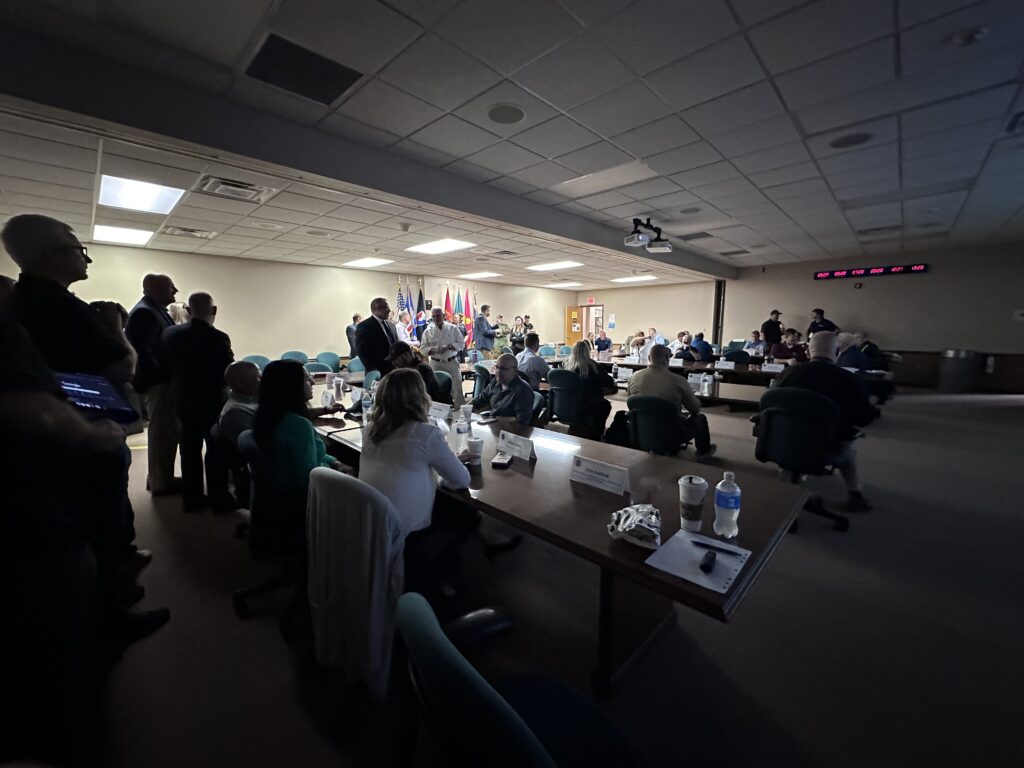
The P.R.O. Model™ brings architects, law enforcement, military leadership, and civilian experts to the same table.
This is how prevention-through-design becomes institutional policy when institutions commit to evolution, not just response.
The P.R.O. Model™ mirrors the fire prevention model that took 150 years to build. It’s been selected twice by the U.S. Department of Justice as “A” national standard, the only prevention framework to receive that distinction twice; here’s how it works:
P. Prevention (Deter From Happening)
Architects, facility managers, threat specialists, and life safety engineers sit at the design table. Before construction, they ask:
- How do we design compartmentalization that forces an attacker to move through controlled areas?
- Where should visibility be maximized so concealment is impossible?
- How do egress routes naturally guide occupants away from threat?
- What environmental cues discourage violent behavior before it starts?
- How do we make an attacker’s plan harder to execute without making the space feel like a fortress?
Result: Many incidents never happen because the architecture defeated the plan. Prevention isn’t a response it’s preventing the incident from occurring.
R. Response (Alert & Shelter Immediately)
If an incident occurs, response is instantaneous and dual-directional:
- Occupant alert: Everyone inside knows threat type and location within 30 seconds
- Responder notification: Police/fire/EMS receive building intelligence, threat location, and occupant locations simultaneously
- Shelter activation: Safe zones activate, communication systems establish occupant-to-responder contact
- Route guidance: Occupants know safest egress routes; responders know optimal entry/movement paths
Result: During the 12-15 minutes before police arrive, occupants are sheltered and communicating. Responders arrive with complete situational awareness.
O. Options (Built-In Redundancy)
No two incidents unfold identically. The design includes flexibility:
- Multiple egress routes with different capability levels
- Backup communication systems if the primary fails
- Alternative safe zones depending on threat location
- Architectural flexibility for different occupancy types
Result: The system doesn’t fail because there’s always a built-in backup in the architecture.
Preparedness: Civilians Empowered, Not Fearful.
Preparedness is not thinking about danger all day. It’s about designing buildings that make violent incidents harder to carry out. It’s creating communication systems that alert occupants instantly if something happens. It’s having multiple safe routes, so people know where to move. It’s giving responders full information in the first 30 seconds so they can act with confidence.
This is the opposite of fear. Fear says: “Something bad might happen, and I’m helpless.” Preparedness says: “The building is designed to make this unlikely, and if it happens, I know exactly what to do because the architecture guides me.”
We don’t need to teach civilians to fight, we don’t need to run active shooter drills that traumatize people, we need to:
- Design buildings thoughtfully so incidents are deterred
- Install communication systems so alerts are instant
- Create egress routes that are intuitive and redundant
- Build safe zones where occupants can shelter while responders arrive
- Give responders complete building intelligence in real-time
Then occupants go about their lives with confidence, not anxiety, not constantly checking exits, and not obsessively rehearsing escape routes. The obvious alternative is a better approach; confidence that the system works.
Why This Works Where Fear-Based Approaches Don’t: Fear is exhausting and unsustainable because people burn out, but confidence is sustainable. When occupants trust the building design and communication systems, they can move forward without anxiety. That’s not naïveté, that’s based on evidence. The building is objectively harder to harm, and responders will arrive with full information. Occupants have clear routes and safe zones; it’s a system that works.
The Moment We’re In
We have the evidence: fire prevention works, and police chiefs are ready to integrate prevention expertise into their departments. Architects understand that safety is a design principle, not an afterthought. Civilians want to be part of the solution.
The Active Shooter Prevention Project, LLC, has spent 15 years building the framework. The P.R.O. Model™ is proven, and the Community of Experts includes 800+ years of combined experience across 140 partnerships: architects, fire chiefs, police leaders, life safety engineers, military personnel, and facility managers.
What’s Missing: Scale, national adoption. Police departments at every level understand that prevention-through-design is not a threat to their mission; it’s the evolution of their mission. Just like fire departments evolved 150 years ago, just like they’re still evolving today.
Honoring Victims By Building Better
After the Chicago Fire, America didn’t ask permission from government to rebuild. Architects and builders changed how we construct and fire prevention became law. Victims were honored by doing something better.
Police departments know what needs to happen, they’re choosing not to act, but that doesn’t stop us. Architects can lead and building owners can fund it. Fire marshals can partner and civilians can demand better design.
We don’t need police permission to build safer buildings, we need architects who understand threat mitigation. We need occupants who know their role in prevention not response. We need communication systems that work in the critical first minutes. We need buildings designed so incidents are deterred before they start.
That’s how we honor victims, not with faster police. With buildings that make violent incidents harder to execute and occupants empowered by design.
Ready to Build Preparedness Into Your Organization?
ASPP™ works with police departments, fire departments, architects, facility managers, and organizations to implement the P.R.O. Model™ framework from new construction planning to existing building assessments. We bring the right people to the table and build preparedness in.
Share this article

Written by : Chris Grollnek
Active Shooter Expert Chris Grollnek (#activeshooterexpert) is a Former U.S. Marine and retired police detective corporal, the Chairman of the Board and Founding Principal of the Active Shooter Prevention Project (ASPP™), and the creator of the P.R.O. Model™, Prevention. Response. Options. Selected by the Department of Justice as "A" national standard for the Assistant United States Attorneys and across the department, and in use at some installations and commands across the Department of Defense. He is an international public speaker, trainer, educator, writer and director who has appeared in numerous documentaries, and he provides consulting to Fortune 500 companies and special events. Grollnek has testified about the terrorism and counterterrorism training needs of the United States before House Ways and Means, and in Senate testimony convened by Sen. Kay Bailey Hutchison in the Hart Senate Office Building in 2002. Ahead of that testimony, the Center for Strategic and International Studies (CSIS) in Washington, D.C. invited him to brief Ph.D. and senior executive staff of the U.S. Government on subterranean training, complex curriculum development and public lectures.
Latest articles
November 6, 2026
November 6, 2026
November 6, 2026