Mission, Standards and Why We Do This
A stranger with a problem should be able to find help before the worst day, not after it. That is the whole mission, and the active shooter prevention standards below are what we have committed to in order to keep it honest.
Why this company exists
Before any of this was a profession, a police detective corporal responded to an active shooter incident and arrived to find a problem that response could no longer solve. There was a vehicle borne improvised explosive device. More than 1,000 rounds were fired. 168 of them were fired at the officers responding.
Everyone did their job that day. That is exactly the point. By the time the first unit rolled, every remaining decision was a response decision, and the outcome had already been shaped months earlier by people who never knew they were shaping it.
Chris Grollnek, Chairman of the Board & Founding Principal, is that detective. He is a former U.S. Marine and retired police detective corporal. He went back to school afterward and wrote his graduate capstone on the active shooter phenomenon, because the existing literature did not answer the question he had walked away with: what would it have taken to interrupt this before it started?
The P.R.O. Model™ is the answer he built. That is why we lead with prevention rather than response. It is not positioning. It is arithmetic learned the expensive way.
The Active Shooter Prevention Project, LLC (ASPP™) exists because the national conversation spent two decades getting faster at responding and almost no time getting better at preventing. Response is necessary and we teach it. It is also, every single time, an admission that prevention already failed. The federal research says the same thing: the FBI study Making Prevention a Reality examines identifying, assessing and managing the threat of targeted attacks, which is the ground our active shooter prevention standards are built on.
The active shooter prevention standards we hold ourselves to
| Commitment | How it is enforced in practice |
|---|---|
| Prevention first | Every engagement starts with what could interrupt an attack during planning, not with how fast people evacuate |
| Evidence over marketing | We point at independent sources rather than reciting numbers. Standings move, and the published record is the authority a |
| Independence | No hardware sold, no reseller agreements, no commissions. A recommendation that pays us is not an assessment |
| Dignity for the affected | Incidents, dates and locations are named. Victims and attackers are not, ever b |
| Honesty about limits | Residual risk never reaches zero and we say so in writing, including to people who would rather hear otherwise |
Source: ASPP™ operating standards, as of August 2026.
a This costs us. A cited benchmark is more persuasive in a sales meeting than a link. It is also the first thing to go stale.
b Naming an attacker hands them the thing many of them wanted. Naming a victim costs a family something and buys the reader nothing.
What we will not do
A page of active shooter prevention standards that only lists virtues is a brochure. These are the things we turn down.
We will not sell fear. A room that leaves frightened has been handed a feeling instead of a capability, and frightened people do not perform. Be Prepared. Not Scared.
We will not promise safety. No assessment, no technology and no training reduces risk to zero. Any firm that tells you otherwise has told you something useful about the firm.
We will not take a political side on prevention. An attacker planning violence against a school, a church, a stadium or a shopping center does not check the voter registration of the people inside first. Evil does not discriminate, and neither do we. We have delivered the identical presentation to audiences on both sides of the aisle and the content has never moved.
We will not claim capability we cannot staff. Where a discipline is outside our depth we bring in the Community of Experts or we say the work is not ours to take.
The standard behind the work
The P.R.O. Model™, which stands for Prevention, Response, Options, was selected by the U.S. Department of Justice as “A” national standard for the Assistant United States Attorneys and across the Department for active shooter prevention, first for the 2022–2025 cycle and again for 2026–2030. The P.R.O. Model™ is also in use at some installations and commands across the Department of Defense. The national training video built on it was produced for 10,700 Assistant United States Attorneys.
It was created by Chris Grollnek, Chairman of the Board & Founding Principal, a former U.S. Marine and retired police detective corporal who was on scene at an active shooter incident before this became a profession. That is the origin of the whole thing, and it is why the framework starts before the shooting does.
The places we have stood
Some of this work happens in rooms. A good deal of it happens standing on a sidewalk outside somewhere that used to be ordinary, looking at a building and understanding, too late to matter, exactly where the chain could have been broken.
These two photographs were taken by Chris Grollnek at places he went himself. They are here for one reason. Everything above this point, the standards, the refusals, the framework, exists because of people who are not here to read it.
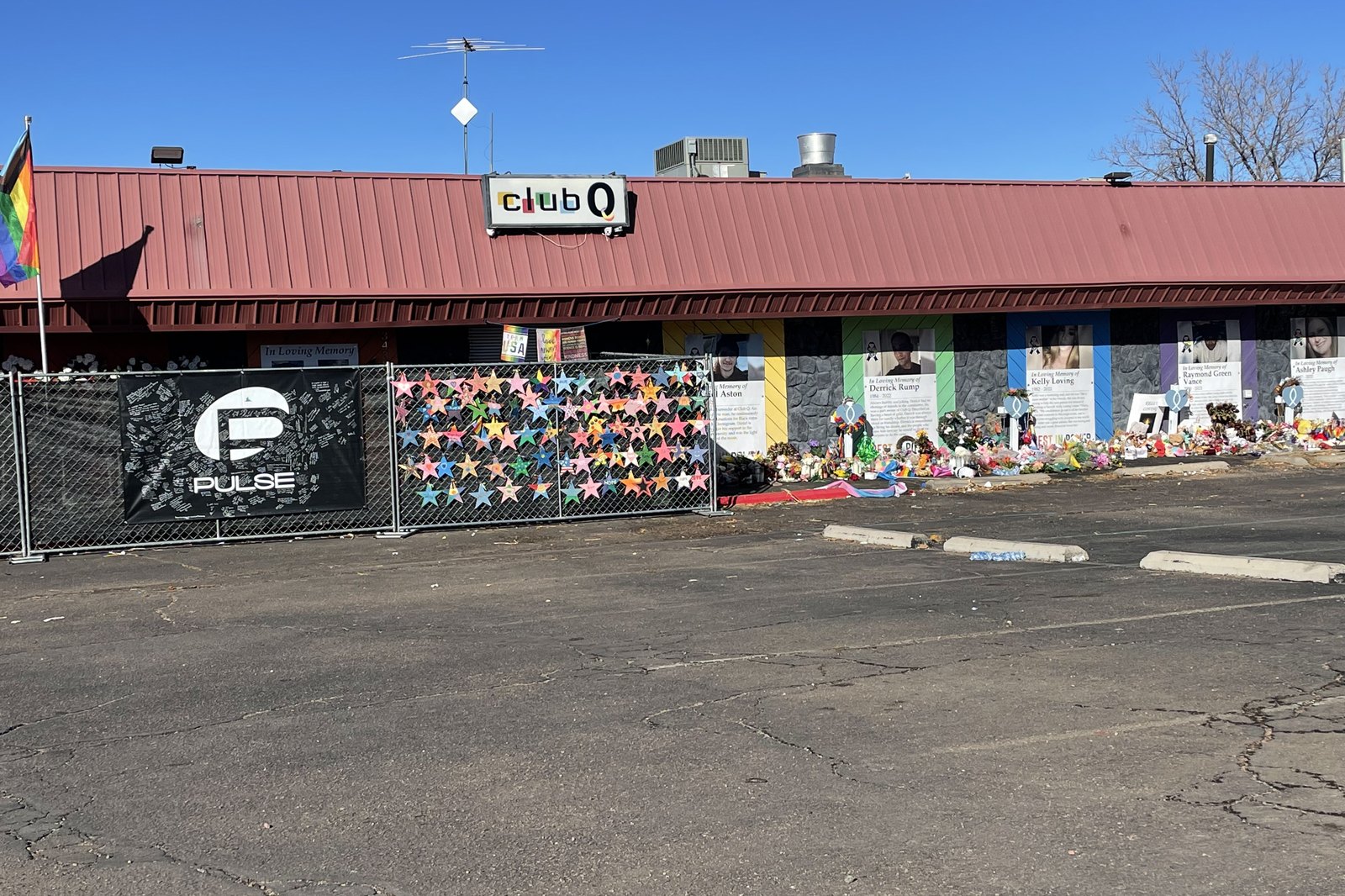
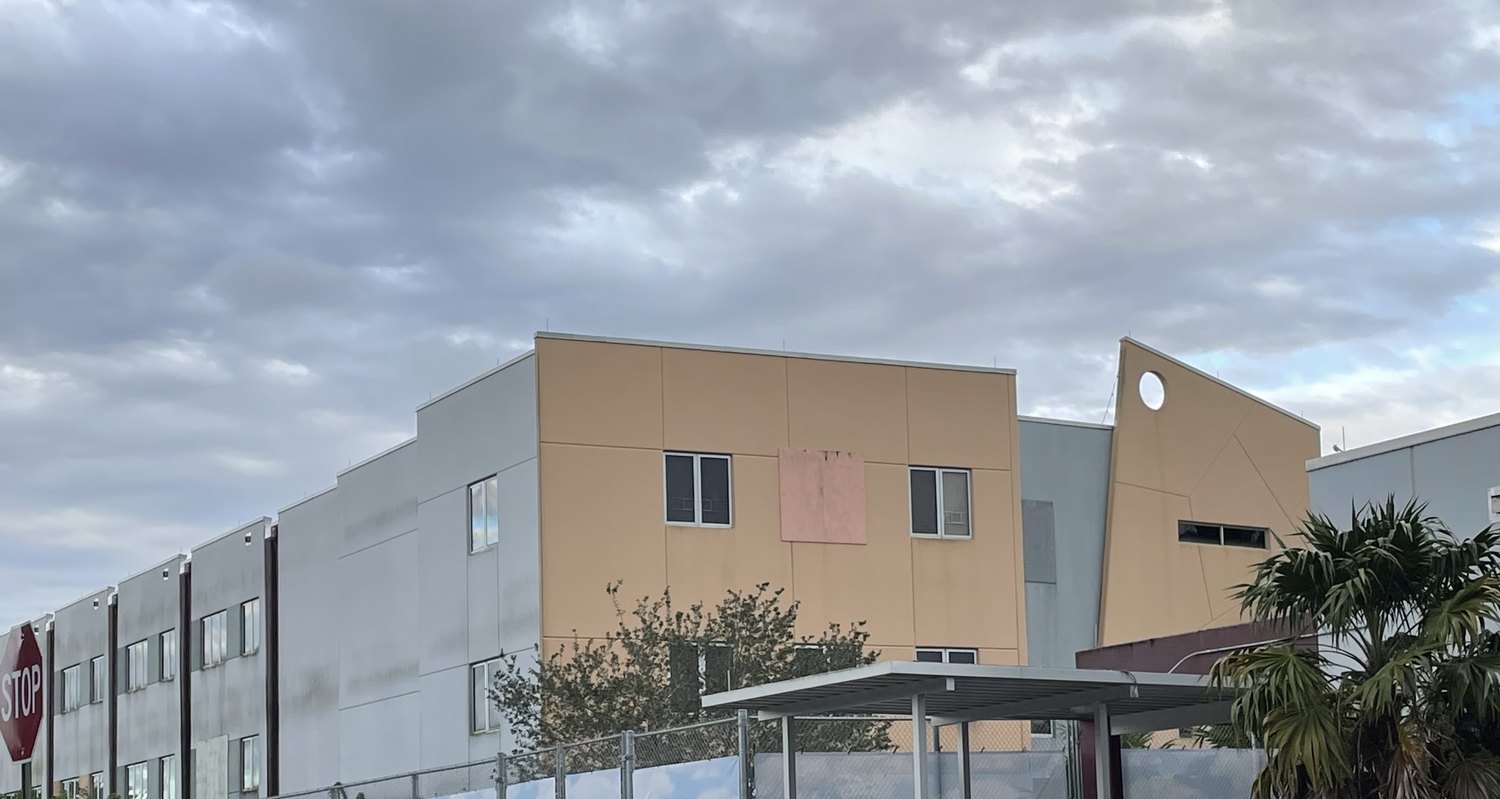
We do not name the people who were taken. That is a deliberate choice and it is the only way we know to honor them without turning a family’s worst day into someone else’s marketing. The way we honor them is by making sure there is no next one. Prevention is not an abstraction to anyone who has stood at a fence like that. It is the only answer that arrives in time.
Why it is a passion more than a business
We have done expert witness work in multiple cases for victims’ families. Sitting across from people who lost somebody changes permanently what you are willing to say in a sales meeting, and what you are willing to sell. They are also the reason the phrase we use is not a tagline: #NEVERHERE™ is a destination, and every community gets to claim it.
Mission and standards
- Mission Bigger Than Business
- Lessons from a Lifetime in Security
- From Tragedy to Prevention
- Building Safety Without Fear
- Proactive Prevention Is No Longer Optional
- What You Do Now Determines Who Is Protected Tomorrow
- Hope on the Horizon
- Perspective on Security Planning
- Lessons Learned, Lessons Shared
- 60 Days of Building
- Our Expert Witness Work for Victims’ Families
Schools, children and sacred spaces
- Prepare Children for Emergencies
- Appreciation and Urgency in Securing Our Nation’s Schools
- Securing Private and Religious Schools
- Securing Houses of Worship
- A Proactive Approach for Houses of Worship
- Strengthening the Safety of Our Sacred Spaces
- ZeroNow: Innovating the Future of School Safety
Workplace, duty of care and liability
- Duty of Care in the Workplace
- Mitigating Preventable Liability Risk
- Access Control, a Critical Foundation
- Safety Across Every Law Office
- Preparing Organizations for Emergency Situations
- A Guide to CEO Travel Security
- Hiring in a Paradox
Service, community and country
- Recognizing Veterans and ASPP Contributors
- Memorial Day 2025
- Independence, Resilience and Freedom
- Building Safer Communities Together
- Suicide Prevention Month: Fostering Awareness for a Safer Society
- Reflections on the 1967 Boy Scout Handbook
In the field and in the press
- Why Garrett Chose ASPP™
- ASPP™ at GSX, Dallas
- Empowering Libraries at TLN Tech Forum
- The Joe Piscopo Show
- Letter to the Editor, New York Times
- Empowering Safety Across the Globe
- TSA Administrator’s Intent 3.0
- Glenn Norling on Political Event Security
- Assessing the Police Response to the Texas School Massacre
#NEVERHERE™ is the destination. The P.R.O. Model™ is how we get there.
The P.R.O. Model™ · P.R.O. Model™ Workshops · Request a consultation
Related ASPP Services
- Training, Assessments and Workshops. Assessment, workshop and training delivery built on the P.R.O. Model™.
- Active Shooter Incidents and What They Teach. What past attacks reveal about the window before the first shot.
- Weapons Detection Technology. Detection, mapping and screening technology, including the Blue Grass Army Depot deployment.
- The Community of Experts. The subject matter experts who support ASPP engagements.
Further Reading
- The Full Prevention Solution. One framework, three disciplines, and why partial answers fail.
- Stop, Drop and Roll. The fire safety lesson that shaped how prevention is taught.
Why this work matters to us
Prevention is not an abstraction. These are the people and moments behind it.