
Lessons from a Lifetime in Security: Championing a National Standard for Active Shooter Prevention
By David Glaser, US Army Major General (Retired)
As a retired Major General with 36 years of dedicated service in security operations within the US Army, I’ve witnessed the transformative power of proactive prevention in high-stakes environments—from leading antiterrorism initiatives to overseeing base security protocols. The difference between chaos and safety often hinges on robust, standardized policies. Today, I continue this mission with the Sam Houston State University Colleges of Criminal Justice and Education, and the Active Shooter Prevention Project (ASPP), partnering to shift active shooter strategies from reaction to prevention. I’m thrilled to highlight that ASPP has announced its second selection to lead the development of the Active Shooter Prevention policy standard for the Department of Justice, effective January 2026. Drawing on my decades of experience, I see clear parallels between crime prevention strategies and the well-entrenched fire safety standards that have transformed our society. It’s time we apply the same rigor to active shooter prevention, and ASPP is at the forefront of this critical movement.
The Power of Prevention: Insights from Military Security Operations
In the military, security is a proactive ecosystem designed to anticipate threats. Over my 36 years, I learned that implementing crime prevention activities—such as risk assessments, training programs, technology, and standardized response protocols—not only mitigates immediate dangers but yields long-term benefits that ripple through organizations and communities.
Consider fire safety standards as a benchmark. Before national fire codes, like those from the National Fire Protection Association (NFPA), fires devastated cities, causing immense loss. Today, sprinklers, smoke detectors, and evacuation plans are standard, slashing fatalities, property damage, and mental anguish. These measures cut insurance costs, reduce lawsuits, and strengthen community trust—proof that prevention pays dividends.
My military experience mirrored this. While commanding a major installation, we implemented a threat detection program that identified insider risks early, saving taxpayer dollars and sparing families heartbreak. Where federal or Department of Defense security standards applied, consistency amplified these benefits, minimizing vulnerabilities. Yet, in the civilian world, active shooter prevention lacks this uniformity. Schools, workplaces, and places of worship rely on fragmented policies, leaving gaps that tragedy exploits. Survivors face PTSD, communities fracture, and economies suffer. Just as fire standards evolved, active shooter prevention must follow.
Bridging the Gap: Partnering with Sam Houston State University and ASPP
My passion for prevention continues through my work with Sam Houston State University’s Colleges of Criminal Justice and Education, where we’re collaborating to redefine active shooter prevention strategies. Our goal is to move beyond a response-focused standard to one rooted in prevention, equipping communities with tools like Crisis Response Leader Training simulations and School Ranger Programs to stop incidents before they start while also saving money through innovative use of resources. This partnership leverages cutting-edge research, education, and training to develop scalable prevention models, akin to fire safety codes.
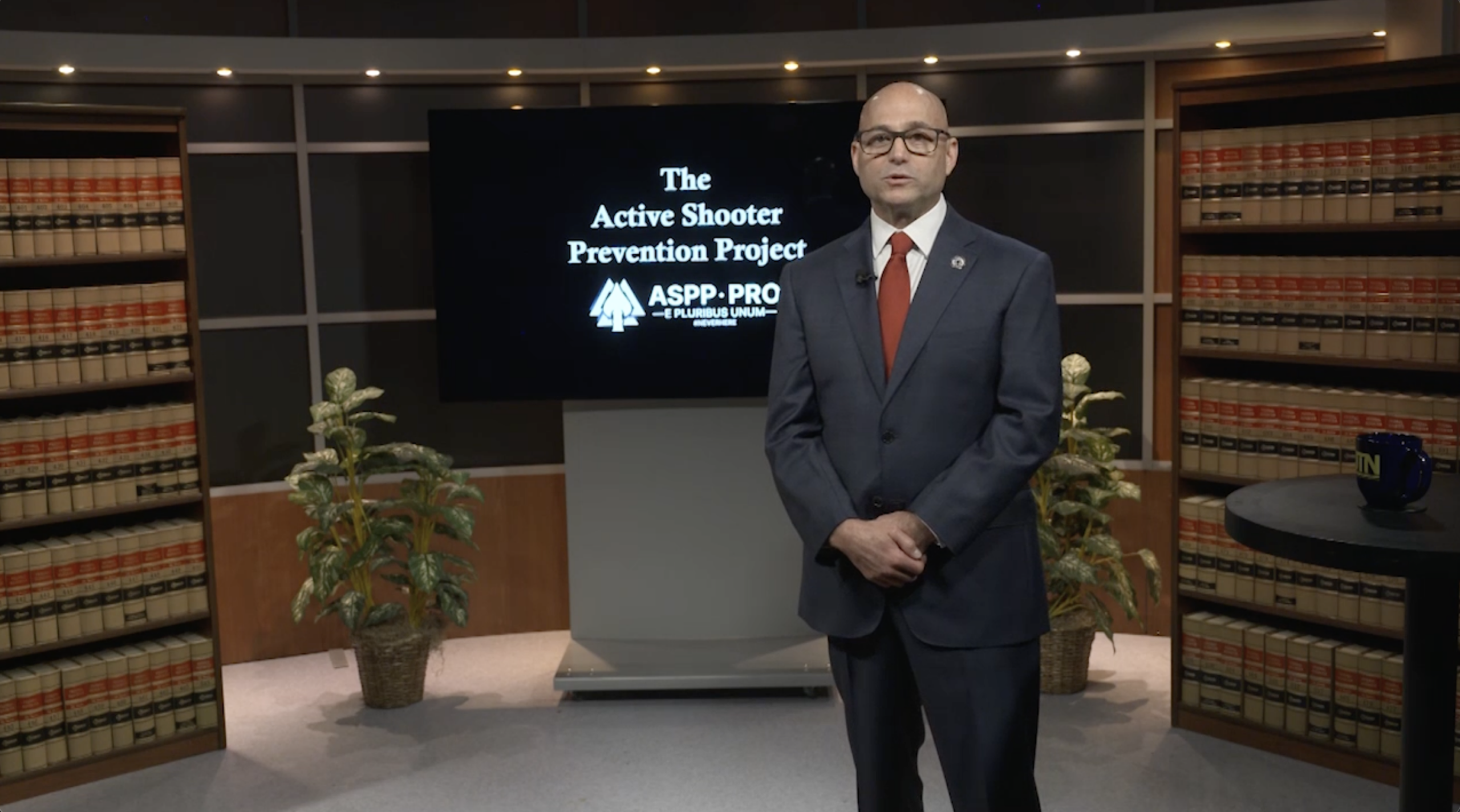
ASPP, led by Chris Grollnek, complements these efforts. Their second selection by the Department of Justice to lead the Active Shooter Prevention policy standard, effective January 2026, builds on their prior adoption by four U.S. government agencies. This milestone, detailed in their article “A National Standard of Prevention,” underscores the efficacy of their P.R.O. Model (Prevention, Response, Options). This framework prioritizes proactive education, response readiness, and empowering options.
ASPP’s nonprofit arm, ASHER 360, raises funds to make these tools accessible to all, ensuring safety isn’t tied to wealth. Their vision of “Destination #NEVERHERE” aligns with my military experience and academic efforts at Sam Houston State. A national standard could mirror fire codes’ success: standardized school training, mandatory business assessments, and community-wide awareness, reducing costs, easing mental health burdens, and fostering safer societies.
For deeper insights, visit ASPP’s blog at https://aspppro.com/our-blog/. Posts like “What You Do Now Determines Who’s Protected Tomorrow” emphasize proactive mindsets, while “Active Shooter Prevention PRO Model Explained” details their framework. Their Memorial Day 2025 reflection honors victims while urging action, and “Prepare Children for Emergencies” (June 13, 2025) offers family guidance.
A Call to Action: Building a Safer Future Together
From my perspective as a retired military leader and Sam Houston State University leader, ASPP’s renewed DOJ mandate signals a turning point. Just as fire standards became second nature, a national active shooter prevention standard can normalize safety protocols, saving lives and resources. I’ve seen prevention work in the Army, and I’m committed to seeing it thrive in our communities through partnerships with Sam Houston State and ASPP.
Join us, share these resources, and advocate for change. Because preparation isn’t just wise—it’s essential.
#NEVERHERE #ActiveShooterPrevention #NationalStandards #MilitaryInsights #CrimePrevention #SamHoustonState #DOJStandard #activeshooterexpert Chris Grollnek
Share this article

Written by : David Glaser, US Army Major General (Retired)
Dave Glaser Strategic Leadership Consulting Major General Dave Glaser, US Army (Retired), is a highly successful, trusted & principled C-Level Executive, Advisor & Consultant with a strong record for cultivating exceptional teams, developing innovative solutions & maximizing talent. He is an ethics-based leader who is passionate about fostering an environment of trust, respect & empowerment.
Latest articles

June 5, 2026
June 5, 2026

June 5, 2026
