
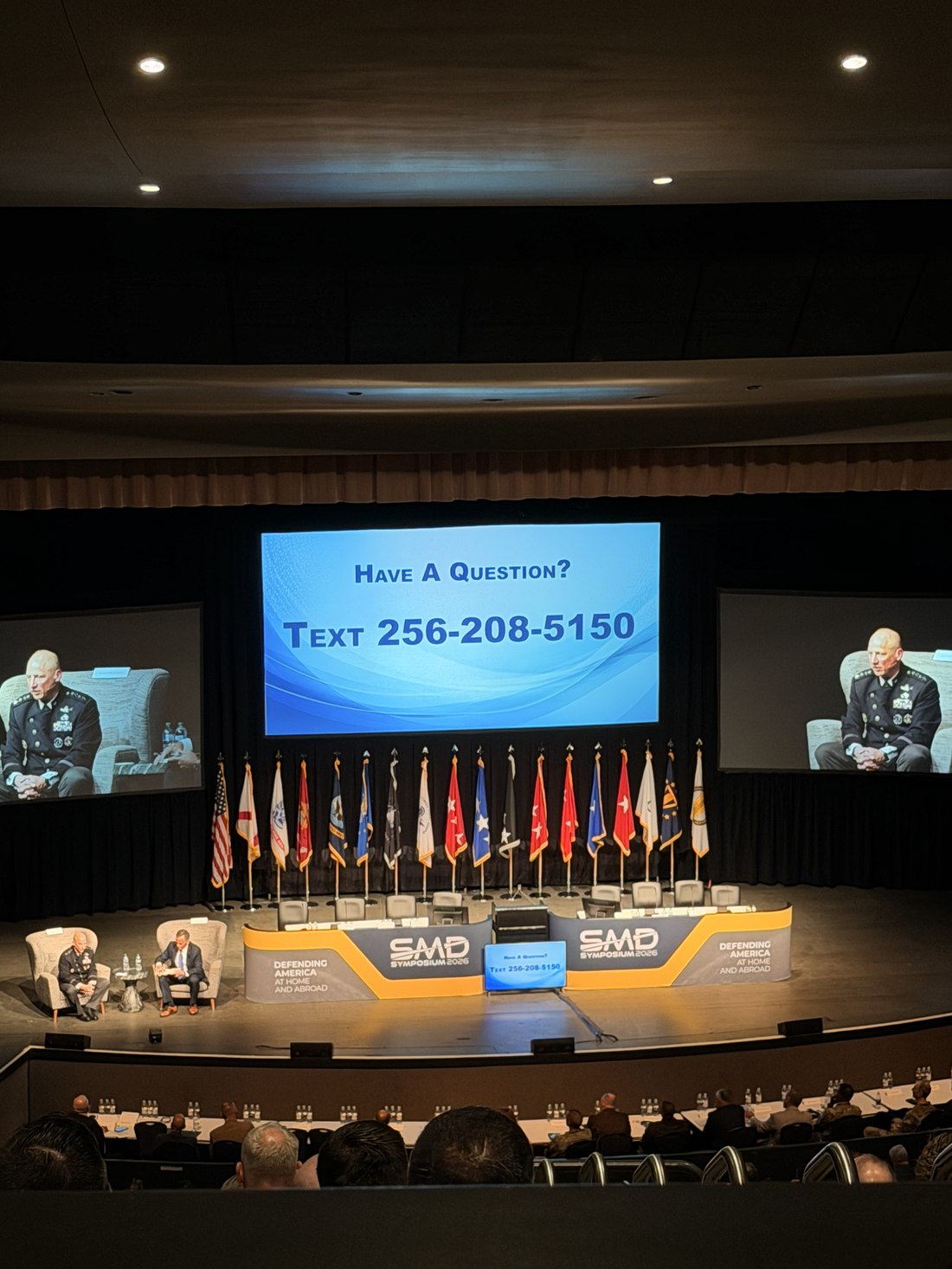
It took an order signed by the President of the United States so that one office could get data the government already owned. That is the Golden Dome story, and it is a warning about speed rather than a story about missiles. Chris Grollnek, Chairman of the Board & Founding Principal, was in the room when it was explained from the stage in Huntsville, Alabama, on 11 August 2026.

What is Golden Dome?
Golden Dome is a United States homeland missile defense program. It began with Executive Order 14186, signed 27 January 2025.
The office running it is led by General Michael Guetlein, who reports directly to the Deputy Secretary of Defense. The FY26 National Defense Authorization Act requires an annual report covering the threat assessment, the system architecture, and cost and schedule estimates. Some members of Congress have said the reporting so far has not been enough.
A panel on Golden Dome had been pulled from the 2025 symposium. In 2026 it ran as a theme across the whole event.
The directive, and what it actually does
Roughly three weeks before the symposium, a National Security Presidential Directive was signed. It gives the Golden Dome office access to government data held across federal agencies.
Before that, getting information out of the FAA, NASA or DHS meant negotiating with each agency separately. General Guetlein described the difference from the stage:
“I don’t have to say, ‘Mother, may I?’ I just say I need that data and they have to give it to me, per the President of the United States.”
General Michael Guetlein, Space and Missile Defense Symposium, 11 August 2026
One distinction has to be stated plainly, because the two readings are not remotely the same.
| Accurate | Not accurate |
|---|---|
| Compels federal agencies to hand over government data they already hold | Access to private citizens’ information |
| An interagency access authority | A domestic surveillance authority |
| Removes the need to negotiate agency by agency | Removes any requirement for a warrant against a person a |
Source: remarks delivered on a public stage, 11 August 2026, attended by Chris Grollnek, and contemporaneous trade reporting.
a The distinction matters. Written loosely, the second column is how a true story becomes a false one.
Now read it as the warning it is. The information already existed. The government already owned it. It simply could not move, and unsticking it required the signature of the President. That is not a story about surveillance. It is a story about how slow the system had become.
Why speed is now the safety issue
Buying, in government, is called acquisition. Two rulebooks govern it: the Federal Acquisition Regulation, known as the FAR, and DoD 5000 for major defense systems.
Both exist for good reasons. Public money should be spent carefully. But rules built over decades to prevent waste also prevent speed. Golden Dome is what it looks like when the prevention of waste starts costing you time you do not have.
Three rooms, one complaint
Here is what makes this worth writing down. Three leaders, in three unrelated rooms, over four months, all said the same thing in their own words. None of them were talking to each other.
| Who | Where | The point |
|---|---|---|
| Governor Wes Moore of Maryland | Public remarks, 2026 | Stop being no and slow. Start being yes and now b |
| Chairman of the Joint Chiefs of Staff | America 250 gala, Fort Worth, April 2026 | Move from being afraid of risk to accepting some of it, on purpose |
| General Michael Guetlein | SMD Symposium, Huntsville, August 2026 | The way we buy will not keep us safe, because we have always done it that way |
Source: Chris Grollnek attended the April and August addresses in person. Governor Moore’s remarks are a matter of public record.
b Governor Moore made the point in a political setting. The phrase is used here only for what it says about the pace of government, with no party framing attached.
When people who agree on almost nothing agree on this, it stops being politics. It is a fact about the machine.
The Chairman’s five words
In April 2026, at the America 250 celebration at Alliance Airport in Fort Worth, the Chairman of the Joint Chiefs of Staff gave a keynote. Chris was in that room and took notes. Those notes have not been published anywhere until now.
The Chairman’s frame was five words, each one a place the system gets stuck:
| The word | The problem it names |
|---|---|
| Culture | Caution is rewarded. Speed is not |
| Competition | The same short list of companies keeps winning |
| Contracts | The paperwork takes longer than the work |
| Capacity | Not enough people who know how to buy quickly and legally |
| Collaboration | Government and industry are not meeting in the middle |
Source: contemporaneous notes taken by Chris Grollnek at the April 2026 address. Paraphrase of themes, not quotation.
Note: no words are placed in any officer’s mouth.
Read the Five C’s against Golden Dome and they stop being a list. Culture is why the data sat still. Contracts are why it took an executive signature to move it. Collaboration is the gap the directive had to jump over.
Why a prevention firm cares about any of this
Because the diagnosis is identical to ours.
Golden Dome needed a presidential directive to move information that already existed inside the government. The failure was never collection. It was routing.
That is the same sentence we have been saying about targeted violence for fifteen years. Somebody almost always knows something. What they know has nowhere useful to go.
The P.R.O. Model™ was selected by the U.S. Department of Justice as “A” national standard for the Assistant United States Attorneys and across the Department for active shooter prevention, first for the 2022–2025 cycle and again for 2026–2030. The P.R.O. Model™ is also in use at some installations and commands across the Department of Defense.
The Department of Defense is extraordinary at responding. It also knows, better than anyone, that the best offense is a good defense. You do not win by being fastest to the fire. You win when the fire never starts. That is what prevention is, and it is why the speed of buying is not an administrative detail. It is the difference between a capability arriving before an event or after one.
Thank you
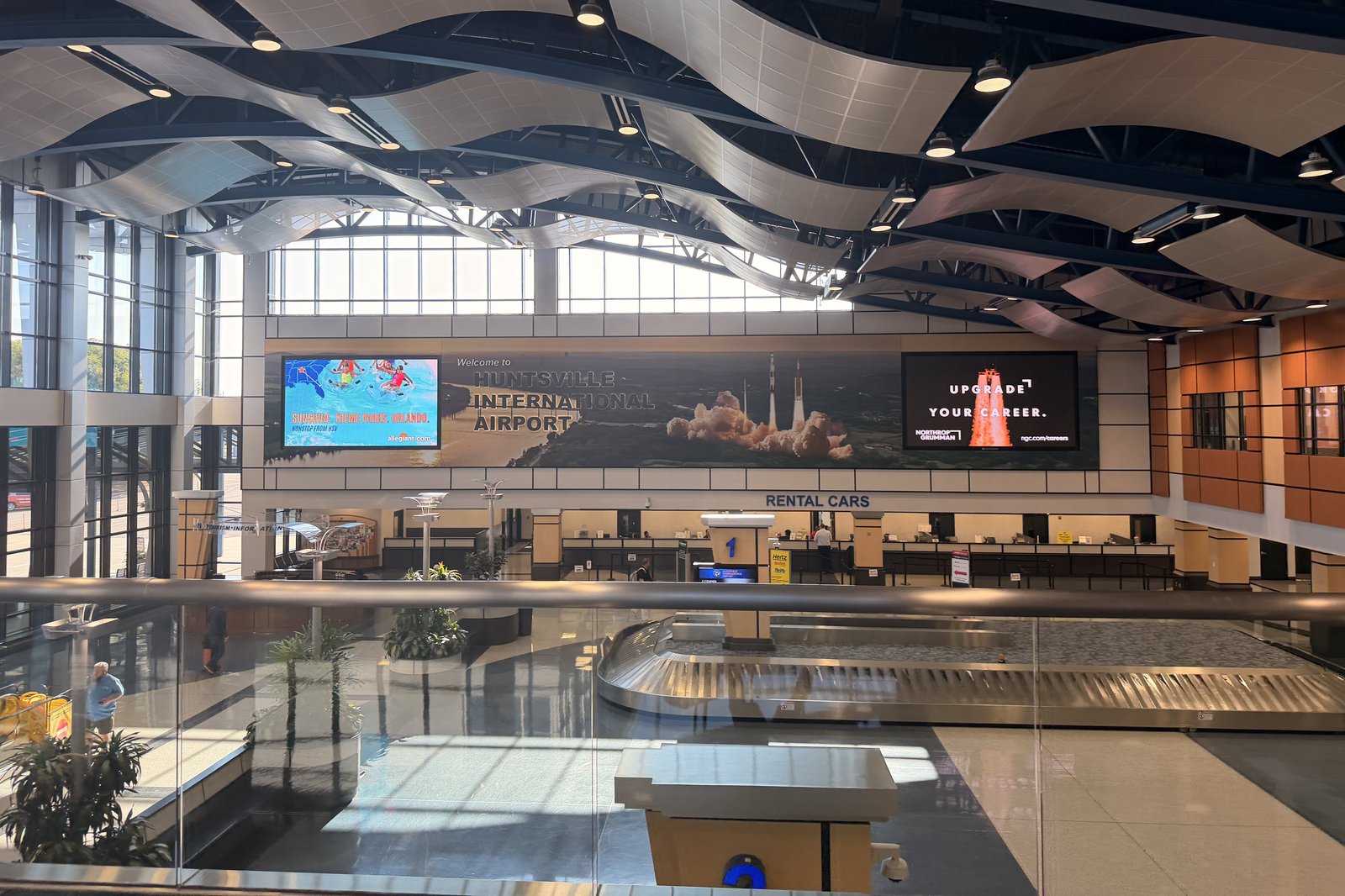
To the organizers of the Space and Missile Defense Symposium, and to officers willing to describe a problem plainly on a public stage rather than manage around it. These are the rooms we get to participate in, and we do not take one of them for granted.
This is one of two pieces from the 2026 Space and Missile Defense Symposium. The companion covers General Stephen N. Whiting’s final keynote as Commander, U.S. Space Command, and why the future arrived before defense procurement did.
#NEVERHERE™ is the destination. The P.R.O. Model™ is how we get there.
The P.R.O. Model™ · DOJ Recognition · Request a consultation
Share this article

Written by : Chris Grollnek
Active Shooter Expert Chris Grollnek (#activeshooterexpert) is a Former U.S. Marine and retired police detective corporal, the Chairman of the Board and Founding Principal of the Active Shooter Prevention Project (ASPP™), and the creator of the P.R.O. Model™, Prevention. Response. Options. Selected by the Department of Justice as "A" national standard for the Assistant United States Attorneys and across the department, and in use at some installations and commands across the Department of Defense. He is an international public speaker, trainer, educator, writer and director who has appeared in numerous documentaries, and he provides consulting to Fortune 500 companies and special events. Grollnek has testified about the terrorism and counterterrorism training needs of the United States before House Ways and Means, and in Senate testimony convened by Sen. Kay Bailey Hutchison in the Hart Senate Office Building in 2002. Ahead of that testimony, the Center for Strategic and International Studies (CSIS) in Washington, D.C. invited him to brief Ph.D. and senior executive staff of the U.S. Government on subterranean training, complex curriculum development and public lectures.
Latest articles
November 6, 2026
November 6, 2026
November 6, 2026