By Chris Grollnek, Active Shooter Expert
Active shooter liability no longer stops at the policy binder. In July 2026, Florida’s Fourth District Court of Appeal ruled that a South Florida sheriff’s office must face a jury over its response to a 2018 school shooting, holding that sovereign immunity can protect an agency’s written plans but not the way its people perform when the emergency arrives. The document is not the defense. The response is. And the quality of that response is decided long before the day anyone hopes never comes.
The Department of Justice selected the P.R.O. Model™ as “A” national standard for active shooter prevention for 2022 through 2025 and again for 2026 through 2030, and it is in use at some installations and commands across the Department of Defense. That model rests on an observation this ruling now carries into the courtroom: prevention does not replace response, it prepares it.
Does Sovereign Immunity Protect Against Active Shooter Lawsuits?
Less than most agencies assume. Florida waives sovereign immunity for negligence, within limits, under section 768.28 of the Florida Statutes. Courts still shield discretionary, planning-level decisions, the kind made in conference rooms: which policy to adopt, how to budget for it, what a written procedure should say.
The July ruling drew the line in the other direction for the day itself. Operational conduct, meaning what personnel actually do during an emergency, sits outside that protection. The agency argued immunity shielded its response entirely. The court disagreed, and jury selection begins in March 2027.
In plain terms, a policy in a binder is a protected decision. A response that fails the policy is conduct a jury may now judge.
What Active Shooter Liability Looks Like After the Ruling
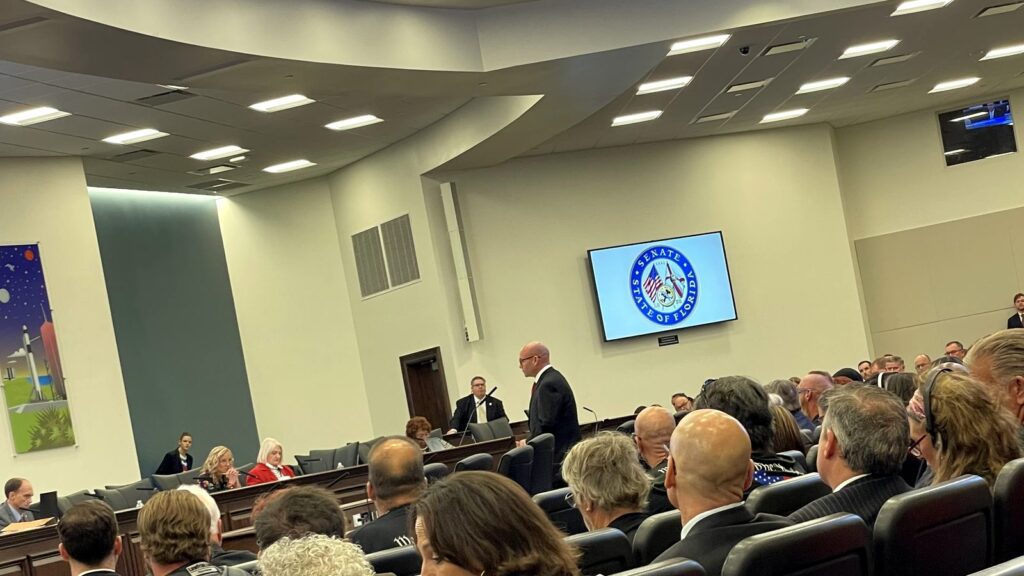
For public agencies, plaintiffs can now reach the conduct itself, so the questions become concrete. Was the policy trained? Were drills run and documented? Did command rehearse the first minutes, and did anyone move toward the threat the way the plan said they would?
For schools, businesses, and houses of worship, which never had sovereign immunity to begin with, the ruling sharpens the standard-of-care conversation their counsel and insurers were already having. The artifacts of readiness become the evidence: training rosters, drill logs, assessment reports, corrective actions closed out and dated. We wrote about those artifacts in our guide to evaluating prevention and response programs, because the organizations that hold them rarely have to explain themselves twice.
Why Prevention Prepares a Better Response
A prevention program does not compete with response training. It gives response something to stand on.
When behavioral concerns are seen early, when reporting channels actually work, when the facility has been assessed and the plan has been exercised, a response begins from preparation instead of surprise. Most organizations need more response training, not less. It simply performs better on a prevention basis, which is why the P.R.O. Model™ treats prevention, response, and options as one connected strategy rather than a contest between them.
That is also what the ruling rewards. A jury looking at operational conduct is looking at readiness, and readiness is built in the quiet months, by the whole strategy working together.
How to Reduce Active Shooter Liability Before Anything Happens
- Put the written policy through a live exercise and document what it exposed.
- Have the facility assessed by qualified professionals and close out the findings.
- Train people to recognize and report concerning behavior, and test the channel.
- Add response training on that foundation, and repeat it until it is muscle memory.
- Keep the records an attorney would ask to see. If they are thin, so is the defense.
Each step reads as risk management because it is. The same work that protects people also produces the documented diligence that stands up afterward.
Part of the Greater Strategy
We hope that day never comes for anyone, and we work so it never does. Hope is not a plan, and neither is paperwork. What this ruling confirms is that organizations are measured by what they built before the moment, not by what they wrote about it.
Prevention is where that building starts. Response training carries it forward. The federal guidance available through the FBI’s active shooter resources points the same direction, and the work of Chris Grollnek, an active shooter expert whose prevention-first model the DOJ selected twice, exists so organizations can start well before the courtroom ever becomes relevant.
If your policy has never been tested against the day it was written for, that is the place to begin. It is better to find out in an exercise than in front of a jury.
Share this article

Written by : Chris Grollnek
Active Shooter Expert Chris Grollnek (#activeshooterexpert) is a Former U.S. Marine and retired police detective corporal, the Chairman of the Board and Founding Principal of the Active Shooter Prevention Project (ASPP™), and the creator of the P.R.O. Model™, Prevention. Response. Options. Selected by the Department of Justice as "A" national standard for the Assistant United States Attorneys and across the department, and in use at some installations and commands across the Department of Defense. He is an international public speaker, trainer, educator, writer and director who has appeared in numerous documentaries, and he provides consulting to Fortune 500 companies and special events. Grollnek has testified about the terrorism and counterterrorism training needs of the United States before House Ways and Means, and in Senate testimony convened by Sen. Kay Bailey Hutchison in the Hart Senate Office Building in 2002. Ahead of that testimony, the Center for Strategic and International Studies (CSIS) in Washington, D.C. invited him to brief Ph.D. and senior executive staff of the U.S. Government on subterranean training, complex curriculum development and public lectures.
Latest articles
November 6, 2026
November 6, 2026
November 6, 2026