The SAFER SKIES Act made counter drone authority a local matter, not only a federal one. As of 2026, trained state and local law enforcement officers can legally detect, track and stop a drone that threatens people, and most organizations have not noticed.
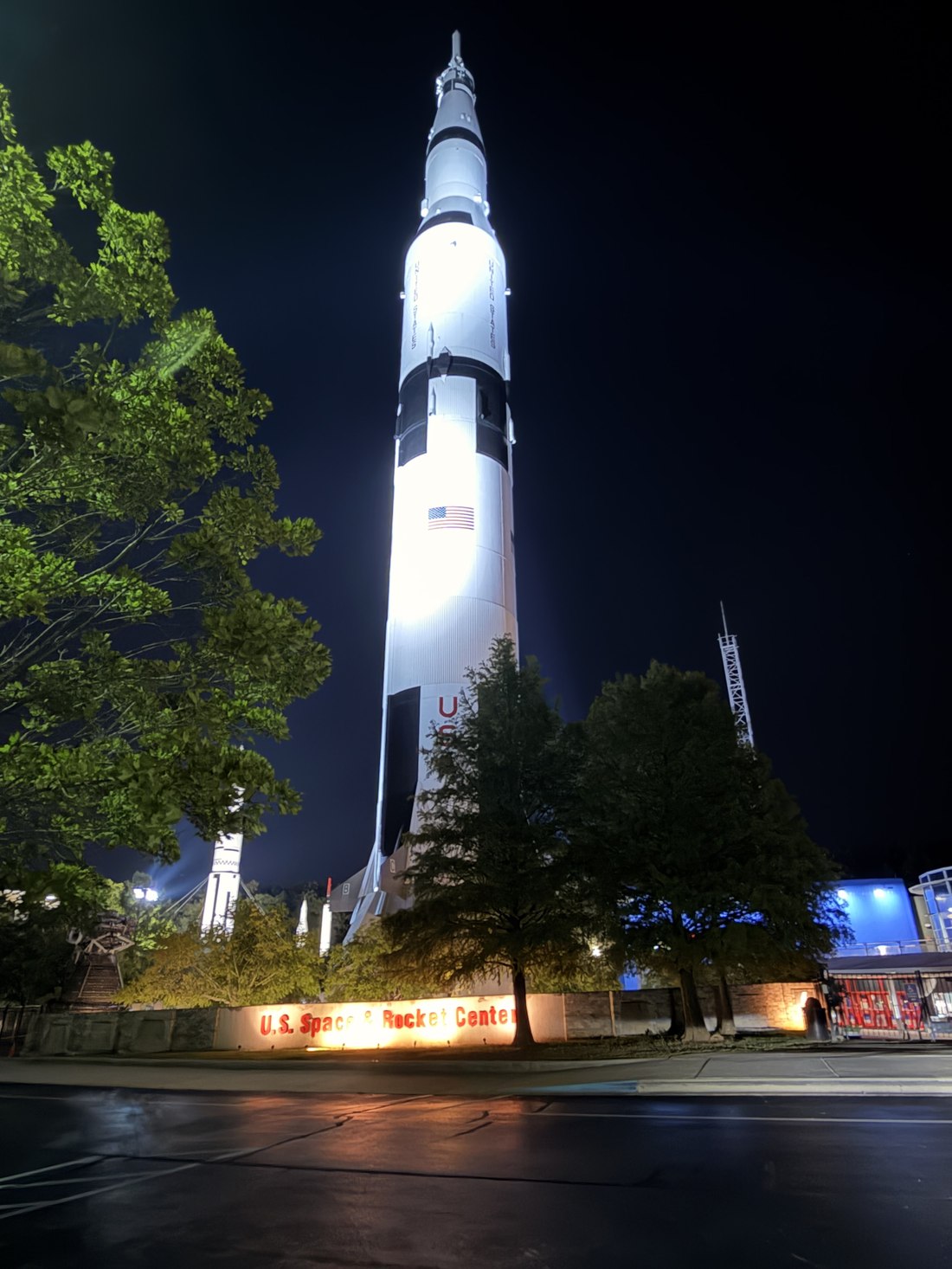
Chris Grollnek, Chairman of the Board & Founding Principal, attended the 29th Space and Missile Defense Symposium in Huntsville, Alabama, from 11 to 13 August 2026. This is the part of that week that matters to a school district, a stadium, a hospital or a manufacturing site.
What is the SAFER SKIES Act?
It is a law, and it is already in force.
Passed as S.3481 within the FY2026 National Defense Authorization Act and signed on 18 December 2025, the SAFER SKIES Act extends counter unmanned aircraft authority to state, local, Tribal and territorial law enforcement and correctional agencies.
| Element | Detail |
|---|---|
| Who gains authority | State, local, Tribal and territorial law enforcement and correctional agencies |
| What they may do | Detect, track, disable or seize a drone posing a credible threat |
| Where it applies | Public safety, critical infrastructure, correctional facilities, major public events |
| The catch | Not automatic. Only individual officers who complete DOJ-selected training and certification may act a |
| Funding | $500 million in FEMA funding across 2026 and 2027. The first $250 million was prioritised for states hosting the 2026 FIFA World Cup |
Source: ASPP™ review of S.3481, the FY2026 NDAA, and the DOJ and DHS Interim Final Rule issued 1 July 2026. Read 15 August 2026.
a Authority follows the certified officer, not the agency. An agency with no certified officers has no authority, regardless of budget or equipment.
Why this should change your planning
Because the SAFER SKIES Act gives the people who would actually be standing at your event a legal path to act, for the first time.
Before this, a drone over a stadium or a school was a federal problem, and federal help was minutes and jurisdictions away. Now the responding agency can hold the authority itself. But only if somebody in that agency has been trained and certified, and only if your emergency plan says who calls them and when.
The gap the military said out loud
At the same symposium, Lieutenant General Joseph F. Jarrard, Deputy Commander of U.S. Northern Command, was asked whether the country could defeat a drone swarm launched from inside the homeland. His answer, reported at the time, was that the sensors are not there.
We are not repeating that to alarm anyone. We are repeating it because it settles an argument organizations have been having with themselves. If the combatant command responsible for defending North America is candid about a detection gap, no private venue should assume somebody else is watching the sky above it.
The threat model behind that warning is not theoretical. In June 2025, drones concealed inside ordinary freight containers on ordinary trucks were driven deep into another country and launched from within. The delivery method removed every advantage distance normally provides.
What this means for a real organization
Most of what the SAFER SKIES Act asks of you costs planning time rather than capital.
| Question to answer | Who owns the answer |
|---|---|
| Does our responding agency have a SAFER SKIES certified officer? | Ask them directly. Do not assume |
| Who in our building notices a drone, and who do they tell? | Your emergency plan, in writing |
| What is the difference between a hobbyist and a threat? | Training. This is a behavioral judgment, not a technical one |
| Are we eligible for FEMA counter UAS funding? | Your state administering agency |
Source: ASPP™ assessment practice applied to the SAFER SKIES framework, August 2026.
Note: none of the above requires purchasing equipment. Three of the four are questions, not products.
Prevention is still the whole argument
A drone overhead is already a response problem. Somebody had to plan it, acquire it, transport it and choose your building. Every one of those steps happened somewhere a person could have noticed.
That is the discipline the P.R.O. Model™ was built for. Prevention, Response, Options, in that order. The U.S. Department of Justice selected it as “A” national standard for active shooter prevention, first for the 2022–2025 cycle and again for 2026–2030. The P.R.O. Model™ is also in use at some installations and commands across the Department of Defense.
The panel in Huntsville arrived at the same place from a different direction. Their moderator’s line was four words. Solutions win, not mitigation. Mitigation is what you say about a problem you have decided to live with.
We will not tell you the risk becomes zero. Residual risk never reaches zero, and any firm that says otherwise is selling something. What we will tell you is which gaps matter most, in what order, and what closing each one takes.
“One of the country’s foremost authorities on active shooters.”
The U.S. Army, describing Chris Grollnek in its published account of the Blue Grass Army Depot demonstration, army.mil, 8 October 2024.
Where to start this week
One. Call your local law enforcement liaison and ask whether any officer is SAFER SKIES certified. That single question tells you more about your actual coverage than any assessment.
Two. Add one line to your emergency plan naming who reports a drone sighting and to whom.
Three. Train the people most likely to see it first. That is rarely the security office. It is groundskeepers, coaches, receptionists and parents in a car line.
#NEVERHERE™ is the destination. The P.R.O. Model™ is how we get there.
The P.R.O. Model™ · Training, Assessments and Workshops · Request a consultation
Share this article

Written by : Chris Grollnek
Active Shooter Expert Chris Grollnek (#activeshooterexpert) is a Former U.S. Marine and retired police detective corporal, the Chairman of the Board and Founding Principal of the Active Shooter Prevention Project (ASPP™), and the creator of the P.R.O. Model™, Prevention. Response. Options. Selected by the Department of Justice as "A" national standard for the Assistant United States Attorneys and across the department, and in use at some installations and commands across the Department of Defense. He is an international public speaker, trainer, educator, writer and director who has appeared in numerous documentaries, and he provides consulting to Fortune 500 companies and special events. Grollnek has testified about the terrorism and counterterrorism training needs of the United States before House Ways and Means, and in Senate testimony convened by Sen. Kay Bailey Hutchison in the Hart Senate Office Building in 2002. Ahead of that testimony, the Center for Strategic and International Studies (CSIS) in Washington, D.C. invited him to brief Ph.D. and senior executive staff of the U.S. Government on subterranean training, complex curriculum development and public lectures.
Latest articles
November 6, 2026
November 6, 2026
November 6, 2026