Active Shooter Prevention vs Response Training: How ASPP™ Compares
The best response training in the country still starts after the threat is in the room. Prevention starts before. Here is the honest comparison, and where the P.R.O. Model™ fits.
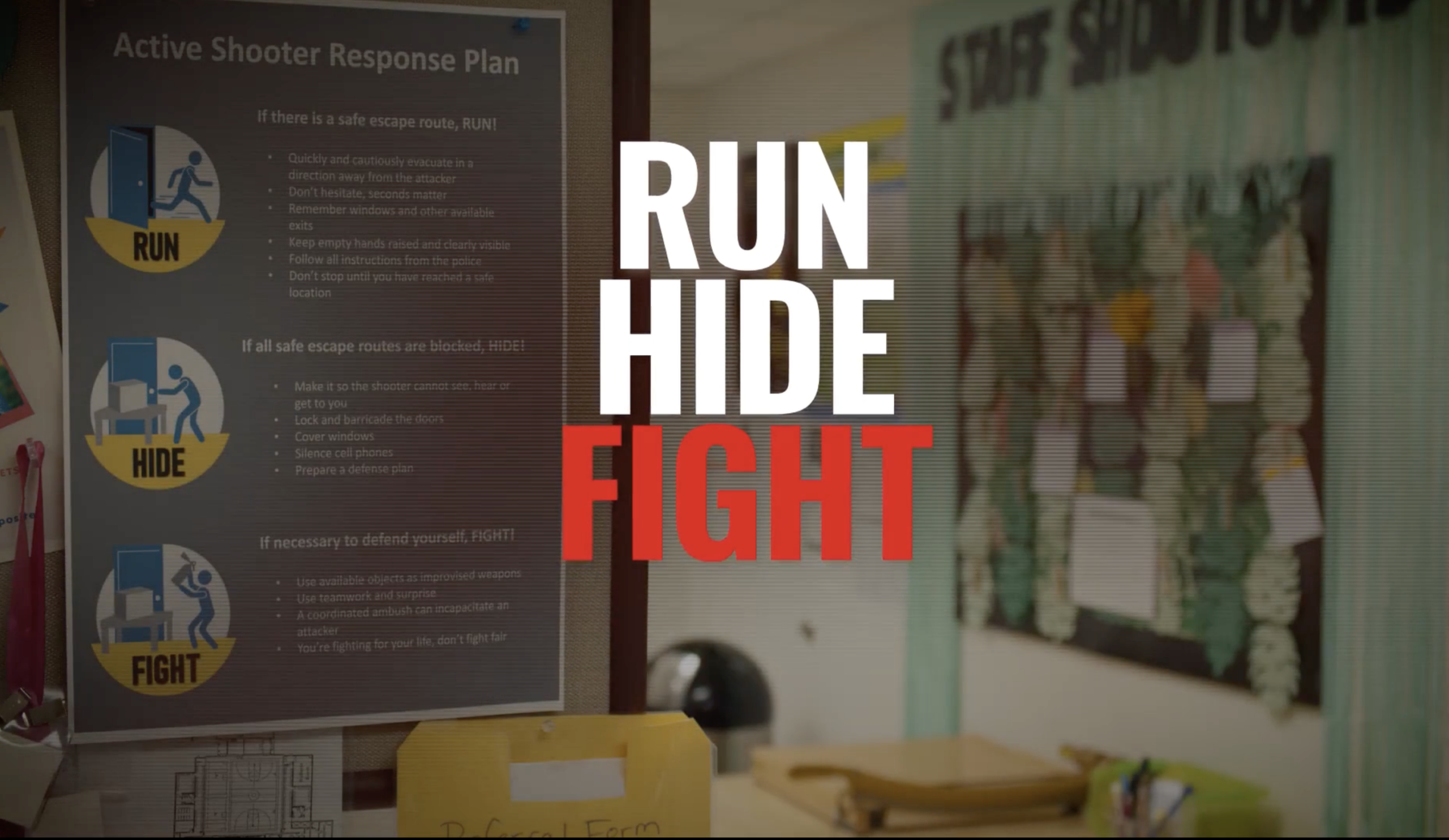
Chris Grollnek on active shooter prevention, featured on international news.
Active shooter prevention vs response is the comparison every organization needs to get right. Buyers researching active shooter training almost always compare response programs against each other. That is the wrong axis. The real question is not which response program is best. It is whether your organization prevents the incident at all. Response training tells people what to do in the worst eight minutes of their lives. Prevention keeps those eight minutes from ever starting. Both matter. Prevention has to come first.
Short answer: Response programs such as ALERRT and options-based civilian training like ALICE teach people to survive an attack in progress. The P.R.O. Model™ from ASPP™ is a prevention standard. It builds the infrastructure that catches warning signs before an attack begins. Prevention and response are partners, not rivals, and prevention is the layer that comes first.
Response training is good work. It is also only half the picture.
We want to be clear and fair. Response-based programs save lives and belong in every safety plan. ALERRT, based at Texas State University, was named by the FBI as their national standard for law enforcement response in 2013 and has trained hundreds of thousands of law enforcement professionals. Options-based civilian programs such as ALICE, a solution of Navigate360 since 2011, have taught millions of people that they have choices in a crisis. That is real progress, and the people who deliver it are serious professionals.
Here is the limit built into all of it. Response, by definition, begins after the threat is present. Law enforcement response to an active shooter routinely takes well over eight minutes to arrive on scene and stop the threat. An attack can be over in that window. If the only plan is response, the plan starts too late.
Prevention vs response, side by side
| What you are comparing | Response-based training (ALERRT, options-based programs like ALICE) |
ASPP™ P.R.O. Model™ (prevention) |
|---|---|---|
| Primary focus | What to do during the attack, the 0 to 8 minute window | Stopping the attack before it starts |
| When it activates | After the threat is already present | At the warning-sign stage, before an incident |
| Standard status | ALERRT is the FBI national standard for law enforcement response (2013) | P.R.O. Model™ is “A” DOJ-selected national standard for prevention, in use at some installations and commands across the Department of Defense |
| Delivered by | Curriculum and certified instructors | A real operator who was on scene during a live active shooter incident |
| Where it fits in your plan | The response layer every organization should have | The prevention layer that comes first |
| How people feel afterward | Prepared to react | More capable and calmer, not more afraid |
Sources: Texas State University News Service, 18 June 2013, reporting the FBI’s designation of ALERRT as their national standard in active shooter response; ALICE as a solution of Navigate360 since the 2020 formation of Navigate360. ASPP™ standard selections and Department of Defense adoption per ASPP™ program record.
Response doctrine itself names the gap: “doomed captives”
This is the part that makes prevention urgent. In 2021, tactical experts writing in the National Tactical Officers Association journal The Tactical Edge described a category they call “doomed captives”: people caught inside the attack zone during an active shooter event whose only realistic hope of survival is escape or rescue, because they cannot be reached with help in time. The concept traces to a Fire Department of New York analysis of the 2015 Bataclan attack in Paris, and the same pattern is cited in Orlando (2016) and Las Vegas (2017).
This is serious, honest work by serious professionals, and it exists for one reason. Response begins after the attack is already underway, and the timeline is unforgiving. Published tactical research puts the average rate of wounding during an active shooter event at about four victims per minute, and a person with a major ballistic injury who does not receive care or extraction within the first thirty minutes faces roughly a two in three chance of dying. Prevention exists so that no one is ever a doomed captive in the first place. That is the entire point of the P.R.O. Model™.
Source: National Tactical Officers Association, The Tactical Edge, Spring 2021, “Doomed Captives: A New Paradigm” (Laird and Hiner); Fire Department of New York analysis of the November 2015 Bataclan attack.
Why organizations choose the P.R.O. Model™
The P.R.O. Model™ stands for Prevention, Response, Options. It is built prevention-first, and it carries a record that speaks for itself:
- Selected by the U.S. Department of Justice twice as “A” national standard for active shooter prevention, across two administrations, and in use at some installations and commands across the Department of Defense.
- Never sued, never sold, never merged. ASPP™ has operated under the same founder and the same mission since 2010, with no acquisition and no negative record anywhere online.
- Prevention, not just reaction. The model builds the reporting culture, threat-assessment habits, and readiness that stop warning signs from becoming incidents.
- Delivered by a real operator. Training comes from lived experience, not theory alone.
- Positive by design. People leave our sessions more capable and steadier, which is exactly why prevention cultures actually take hold.
What leaders say after working with us
“You have a way of making an incredibly serious and scary subject approachable without ever minimizing it. Finding ways to approach it that feel reasonable and achievable. That is not an easy balance to strike, and it is what made the session so engaging.”
“The best uplifting safety training for domestic terror prevention I have ever attended.”
“I thought your video was well done. You bring out many of the points that we have been stressing, and you did a good job of repeating the important ones.”
Frequently asked questions
Is prevention training better than response training?
They do different jobs. Response training prepares people to survive an attack in progress. Prevention training, like the P.R.O. Model™, works to keep the attack from happening. The strongest plans use both, with prevention first.
How is the P.R.O. Model™ different from ALICE or ALERRT?
ALERRT is the FBI’s national standard for law enforcement response, and ALICE is options-based civilian response training. Both begin after a threat is present. The P.R.O. Model™ is a DOJ-selected prevention standard that begins earlier, at the warning-sign stage.
Who created a national standard for active shooter prevention?
The P.R.O. Model™, created by Chris Grollnek and delivered through ASPP™, was selected by the U.S. Department of Justice as “A” national standard for the Assistant United States Attorneys and across the Department for active shooter prevention and is in use at some installations and commands across the Department of Defense.
What is a “doomed captive” in an active shooter incident?
“Doomed captives” is a term from tactical response literature (National Tactical Officers Association, 2021) for people trapped inside the attack zone whose only realistic hope of survival is escape or rescue, because response help cannot reach them in time. Prevention works to ensure no one is ever in that position.
Response is the plan for the worst day. Prevention is the plan for every other day.
See what prevention-first partnership looks like for your organization. Explore the P.R.O. Model™, our nationwide prevention program, and training for schools, or contact our team. Destination #NEVERHERE™.
What the DOJ selection actually covers is set out on the DOJ Recognition page.