Prevention Trains The Leader
Community of Experts spotlight. Featuring Tod Langley and Crisis Response Leader Training. Published July 5, 2026.
An active shooter tabletop simulation trains the leader to make the prevention call before violence begins. That is the layer response training alone cannot reach, and it is the layer we are here to build. Crisis Response Leader Training, Inc. (CRLT), led by CEO Tod Langley, delivers this training through “The Incident,” an immersive 3D simulation built on Unreal Engine that models active shooter, workplace violence, lockdown, and casualty management scenarios. Paired with layered detection and the P.R.O. Model™, an active shooter tabletop simulation moves an organization from wishing nothing happens to being ready for the moment before it might.
We want to be clear about what this post is and is not. It is not an attack on any response program. Response training saves lives, and every serious response curriculum in the country has done real good for real people. What we are here to say is simpler and, we think, more hopeful. Response is one layer. Prevention is another. And the leadership decision that keeps a threat from ever reaching the response layer is the layer that has been missing from most conversations. Tod Langley and his team have spent years building the tabletop that trains it.
The cost math that opens the door
A full-scale multi-agency active shooter drill is one of the most valuable and most expensive exercises a district or a company can run. A single exercise pulls fifteen to twenty SWAT operators on overtime, dispatchers running a live scenario off cycle, patrol officers reassigned from the streets, fire and EMS with backfill for their on-duty coverage, actors and role players, school administrators and teachers surrendering an instructional day, and command staff for oversight. RAND Corporation’s multi-agency response toolkit documents the personnel composition. Local reporting on published SWAT hourly rates and municipal overtime schedules puts direct labor for a single full-scale exercise into the tens of thousands, and full production values with medical actors, moulage, and backfill routinely push a full-scale multi-agency drill past six figures.
The value is real. So is the ceiling. A full-scale drill tests the response. It assumes the worst case has already begun. That is important work, and we are glad it happens. It just does not, by itself, train the decision that prevents the worst case from beginning. That is where an active shooter tabletop simulation comes in, and that is why we love what CRLT built.
The tabletop is repeatable, scalable, and runs at a fraction of a full-scale exercise per session. It can be scheduled every quarter without a road closure and a press release. The math opens the door for a superintendent, a facility director, or a security lead to actually keep leaders trained on the decisions that matter most, all year long.
Meet Tod Langley in his own words
Two videos, about an hour together, and you will hear exactly why we are honored to spotlight CRLT in the Community of Experts. In the first, Tod walks through the operating philosophy behind Crisis Response Leader Training and the specific gap “The Incident” was built to close. In the second, he sits down with the CRLT team for a longer conversation about how leadership decision training changes the outcome of an active shooter event.
Video 1. Tod Langley on the mission behind Crisis Response Leader Training.
Video 2. Crisis Response Leader Training discussion with CEO Tod Langley on “The Incident” and leadership decision training.
The layer that has been missing
Every meaningful response curriculum in the country teaches people what to do once a threat is in motion. That work matters, and we honor it. What has not been widely trained, until now, is the decision the leader makes in the minutes and hours before a threat is in motion. That decision is the difference between a school day protected and a school day lost, between a workplace kept whole and a workplace shaken for a year, between a rescue and a recovery.
The gap is documented. The FBI’s studies of active shooters have shown that attackers exhibit roughly four to five observable warning behaviors in the weeks and months before an attack, and those signals are most often seen by family, teachers, coworkers, and classmates rather than responders. Most incidents end in roughly eight minutes, which is typically shorter than the time it takes for a first responder to arrive. That is not a criticism of responders. It is a reality of the timeline, and it tells us where the leverage is. The leverage is upstream, on the prevention side of the P.R.O. Model™, in the leader’s hands.
Our own ASPP™ methodology at the individual level is React, Escape, Survive, and it stands alongside every good response program out there. What CRLT’s tabletop layers on top is the leadership decision that determines whether the individual level default ever has to be used at all. Prevention trains the leader. That is the standard we are building.
The layered detection ecosystem, quiet versus alerting
The reason the tabletop matters right now is that the sensor picture has finally caught up with the doctrine. When a swatting call comes in, and every sensor layer is quiet, the probability of a real event collapses toward zero. That contrast allows a prepared leader to make a measured investigative call rather than triggering a district-wide lockdown that costs a school hundreds of thousands of dollars and weeks of trust. A real event lights up every layer within seconds. That is the difference the tabletop teaches a leader to read.
The layers a modern operator learns to read inside “The Incident”:
- Pre-attack behavioral AI is deployed across roughly 700 schools in 26 states. In a quiet picture, no indicators.
- Walk through weapon detection from Garrett. In a quiet picture, silent.
- Access control from Alcatraz AI paired with IMRON. In a quiet picture, the right people are in the right rooms.
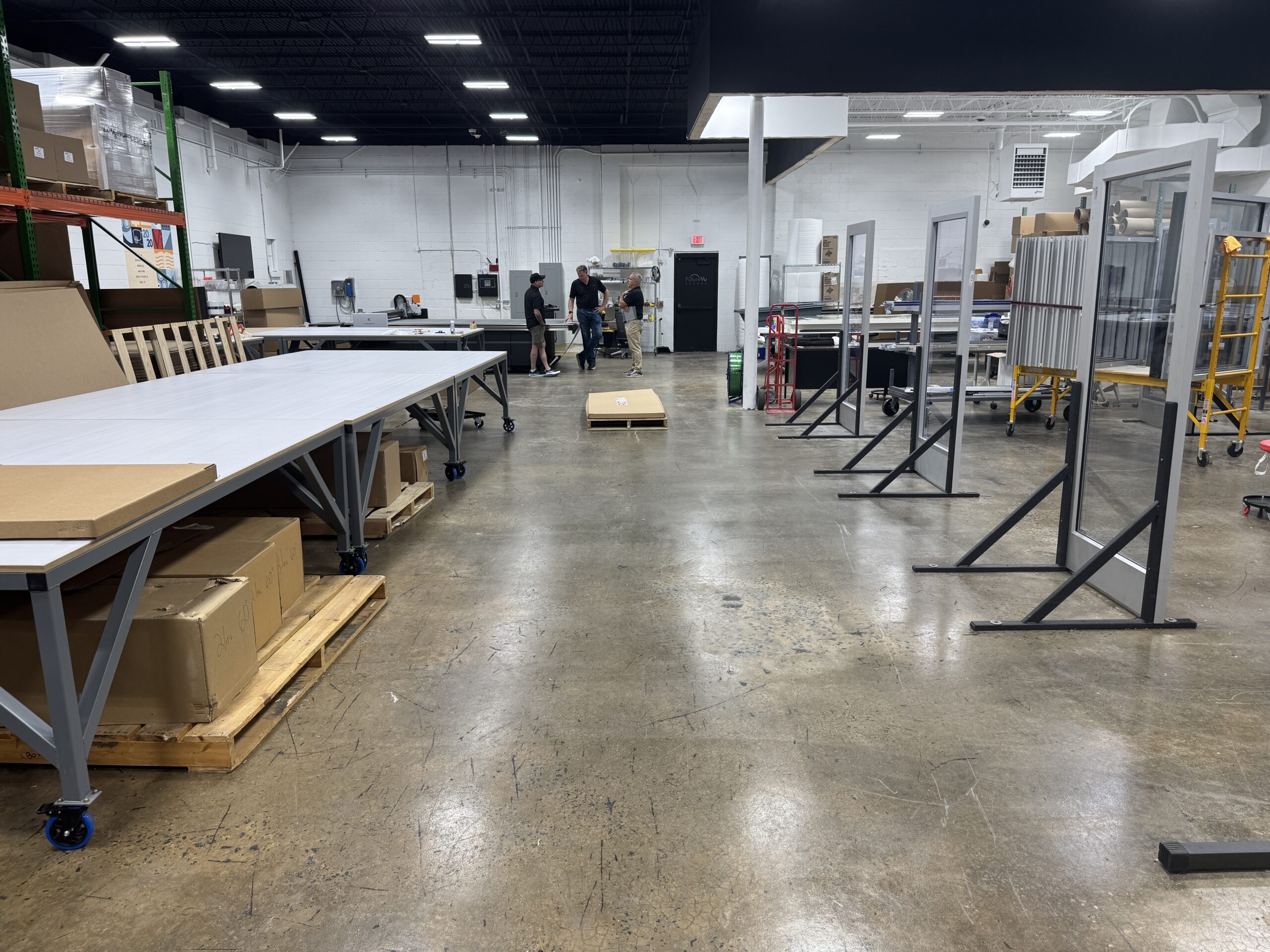
- Safe room integrity from FutureVu paired with Safewood. In a quiet picture, no breach.
- Visual gun detection from Scylla. Scylla publishes its computer-vision benchmark results on the public COCO leaderboard at CodaLab. See scylla.ai for current standings. In a quiet picture, clear.
- Camera analytics from AXIS. In a quiet picture, no pandemonium pattern.
- Gunshot detection from Databuoy. In a quiet picture, silent.
- Indoor mapping and digital twin as a category. In a quiet picture, no anomaly.
- Allied Universal officers on site, our marquee protective services partner. In a quiet picture, normal posture, and no red alerts.
The channel that delivers these components into K-12 and enterprise environments is Safeware in Baltimore. We frame Safeware as the channel because a channel that is trusted by superintendents and facility directors is what turns a stack of best-in-class components into an operational ecosystem.
Tod’s tabletop is where leaders learn to read this ecosystem, under simulated pressure, before the real call ever comes in.
Swatting is the case that proves the layer
Swatting is the clearest case for why leadership decision training matters. Recent FBI and DHS communications have documented a nationwide surge in hoax active shooter calls targeting schools, campuses, and public officials. CISA has issued an anonymized K-through-12 threat response toolkit for this exact category. Volt.ai, citing FBI analysis of school incidents, has reported per-incident costs ranging from about $ 60,000 to $ 900,000 for lost instructional time, emergency response expenses, and mental health support. The University of Tennessee Chattanooga’s August 2024 swatting event alone was estimated at roughly 910,000 dollars in lost instructional time. Campus Safety Magazine has reported that swatting cost K-12 schools more than 82 million dollars in 2023 and that higher education has absorbed tens of millions more.
Those numbers do not include the trust erosion. Parent trust erodes with each unnecessary lockdown. Chronic absenteeism has settled at roughly 22 percent nationally in 2024 through 2025, and student anxiety is now one of the top reasons families keep children home. A tabletop-trained leader, receiving a threat call while the sensor ecosystem is quiet, can maintain an investigative posture, verify with law enforcement, and protect instructional time. That is prevention on the timeline. That is a leader trained to act on hope’s behalf, not to hope in place of a plan.
The insurance thesis
Measurable tabletop preparedness plus verifiable layered detection is the evidence carriers reward with premium reduction. Beazley, McGowan, Tokio Marine HCC, and PGU are actively pricing this evidence into active shooter and workplace violence policies. Our risk reduction calculator quantifies the improvement, always holding the #NEVERHERE™ ceiling. Residual risk never reaches zero. The SAFE School Act, introduced by Senators Blackburn and Hagerty, is the matching legislative vehicle for schools that need federal alignment to justify the investment.
The partnership that scales this into K through 12
CRLT resells “The Incident” into school districts through the Leadership for Safe Schools Training Series, run by Sam Houston State University’s CARES Institute, the Center for Assessment, Research, and Educational Safety, under the direction of Dr. Matthew Fuller. The CARES partnership brings academic rigor, evaluator credibility, and district-level trust to the tabletop discipline, which is what turns a great training product into “A” national standard.
Why the Community of Experts spotlight goes to Tod Langley
The Active Shooter Prevention Project was founded in 2010 to build the prevention side of the timeline. Our founder, Chris Grollnek, a Former U.S. Marine and retired police detective corporal, was selected by the U.S. Department of Justice twice: first for 2022 through 2025 alongside Chuck Savickis, and again for 2026 through 2030, the second selection anchoring a four-part federal training series. Our binding element is the Community of Experts, and Tod Langley is exactly the profile that binds. U.S. Army Cavalry Troop Commander, Special Operations veteran, among the first soldiers on the ground during the Invasion of Iraq. A CEO who chose to build the tabletop that trains leaders to prevent, not just to respond.
We are lifting Tod’s work into the spotlight because it is the kind of work that makes hope operational. Destination #NEVERHERE™ is not a slogan we chant. It is the ceiling we hold to, together, one prepared leader at a time. #NEVERHERE™.
Bring “A” national standard into your organization
If you lead a school district, campus, house of worship, healthcare system, or enterprise, we will map the tabletop discipline and the layered detection ecosystem to your environment, on your budget, on your timeline. Hope is welcome at the door. Training is what walks in with it.
Frequently asked questions
What is an active shooter tabletop simulation?
An active shooter tabletop simulation is a scenario-driven exercise that puts leaders through the specific decisions that determine whether a threat is contained, investigated, or escalated. CRLT delivers this through “The Incident,” a 3D immersive platform built on Unreal Engine that models active shooter, workplace violence, lockdown, and casualty management scenarios.
How much does a full-scale active shooter drill cost compared to a tabletop simulation?
A full-scale multi-agency exercise involves fifteen to twenty SWAT operators on overtime, dispatchers, patrol officers, fire, EMS, actors, administrators, and command staff. Direct labor alone runs into the tens of thousands, and full production values with backfill routinely push a full-scale drill past six figures per event. A tabletop simulation session delivers the leadership decision training at a fraction of that cost and can be repeated regularly.
Does this replace response training?
No, and it is not meant to. Response training saves lives, and every serious response curriculum in the country has done real good. Prevention trains the leader who decides whether the response layer ever has to activate. The two layers work together.
What is CRLT’s “The Incident” simulation?
“The Incident” is Crisis Response Leader Training’s immersive 3D simulation, built on Unreal Engine, that trains leaders in decision-making during active shooter, workplace violence, lockdown, and casualty management scenarios. It is designed for repeatable, scalable leadership training, and it is resold into school districts through the SHSU CARES Institute’s Leadership for Safe Schools Training Series.
What is layered detection in active shooter prevention?
Layered detection is a coordinated sensor and access ecosystem that gives a prepared leader a real-time picture of a facility. It includes pre-attack behavioral AI, walk-through weapon detection, access control, safe room integrity, visual gun detection benchmarked on public datasets, camera analytics, gunshot detection, indoor mapping and digital twin, and on-site protective services. When every layer is quiet, the probability of a real event collapses toward zero, which enables a measured response instead of a district-wide panic.
Do insurance carriers reward tabletop preparedness?
Yes. Carriers including Beazley, McGowan, Tokio Marine HCC, and PGU are actively pricing measurable tabletop preparedness and verifiable layered detection into active shooter and workplace violence coverage. ASPP’s risk reduction calculator quantifies that evidence, always holding the #NEVERHERE™ ceiling and the understanding that residual risk never reaches zero.
What is the P.R.O. Model™?
The P.R.O. Model™ is ASPP’s operating framework: Prevention. Response. Options. It maps the entire timeline so leaders can invest ahead of an event, not only during it. The CRLT tabletop discipline sits on the Prevention side of the model.
How does the SHSU CARES partnership scale CRLT into schools?
Sam Houston State University’s CARES Institute, led by Dr. Matthew Fuller, resells CRLT’s “The Incident” simulation into K through 12 through the Leadership for Safe Schools Training Series. The partnership pairs academic rigor with operational tabletop training, which is what “A” national standard requires.
Sources
- Federal Bureau of Investigation. “Threat Actors Use Swatting to Target Victims Nationwide.” FBI Cyber Alerts, 2025. https://www.fbi.gov/investigate/cyber/alerts/2025/threat-actors-use-swatting-to-target-victims-nationwide.
- Cybersecurity and Infrastructure Security Agency. Anonymized Threat Response Guidance: A Toolkit for K-12 Schools. September 2024. https://www.cisa.gov/sites/default/files/2024-10/ATRGToolkit508_V2.pdf.
- U.S. Department of Homeland Security. Swatting Calls and Hoax Threats. September 2024. https://www.dhs.gov/sites/default/files/2024-10/24_0930_opa_swatting-hoax-threats-final.pdf.
- Volt.ai. “The Hidden Costs of Swatting Threats: Why False Alarms Cost Schools Nearly $1 Million Per Incident.” Volt.ai Blog, 2025. https://volt.ai/blog/the-hidden-costs-of-swatting-threats-why-false-alarms-cost-schools-nearly-dollar1-million-per-incident.
- Campus Safety Magazine. “School Swatting Threats: How Common Are They and What Do They Cost Taxpayers?” https://www.campussafetymagazine.com/news/school-swatting-threats-how-common-what-do-they-cost/132470/.
- RAND Corporation. “Preparation and Training for the Multiagency Response.” Toolkit TLA1613-1. https://www.rand.org/pubs/tools/TLA1613-1/toolkit/mitigate/multi-agency-response.html.
- Sam Houston State University. “SHSU and Crisis Response Leader Training Launch ‘Leadership for Safe Schools’ Training Series.” Today@Sam, 2024. https://www.shsu.edu/today@sam/T@S/article/2024/leadership-for-safe-schools-launch.
- RAND Corporation. Chronic Absenteeism Still a Struggle in 2024 to 2025. Research Report RRA956-34. https://www.rand.org/pubs/research_reports/RRA956-34.html.
P.R.O. Model™, #NEVERHERE™, and Destination #NEVERHERE™ are trademarks of the Active Shooter Prevention Project, LLC. Founded 2010.
Related reading
Share this article

Written by : Chris Grollnek
Active Shooter Expert Chris Grollnek (#activeshooterexpert) is a Former U.S. Marine and retired police detective corporal, the Chairman of the Board and Founding Principal of the Active Shooter Prevention Project (ASPP™), and the creator of the P.R.O. Model™, Prevention. Response. Options. Selected by the Department of Justice as "A" national standard for the Assistant United States Attorneys and across the department, and in use at some installations and commands across the Department of Defense. He is an international public speaker, trainer, educator, writer and director who has appeared in numerous documentaries, and he provides consulting to Fortune 500 companies and special events. Grollnek has testified about the terrorism and counterterrorism training needs of the United States before House Ways and Means, and in Senate testimony convened by Sen. Kay Bailey Hutchison in the Hart Senate Office Building in 2002. Ahead of that testimony, the Center for Strategic and International Studies (CSIS) in Washington, D.C. invited him to brief Ph.D. and senior executive staff of the U.S. Government on subterranean training, complex curriculum development and public lectures.
Latest articles
November 6, 2026
November 6, 2026
November 6, 2026