
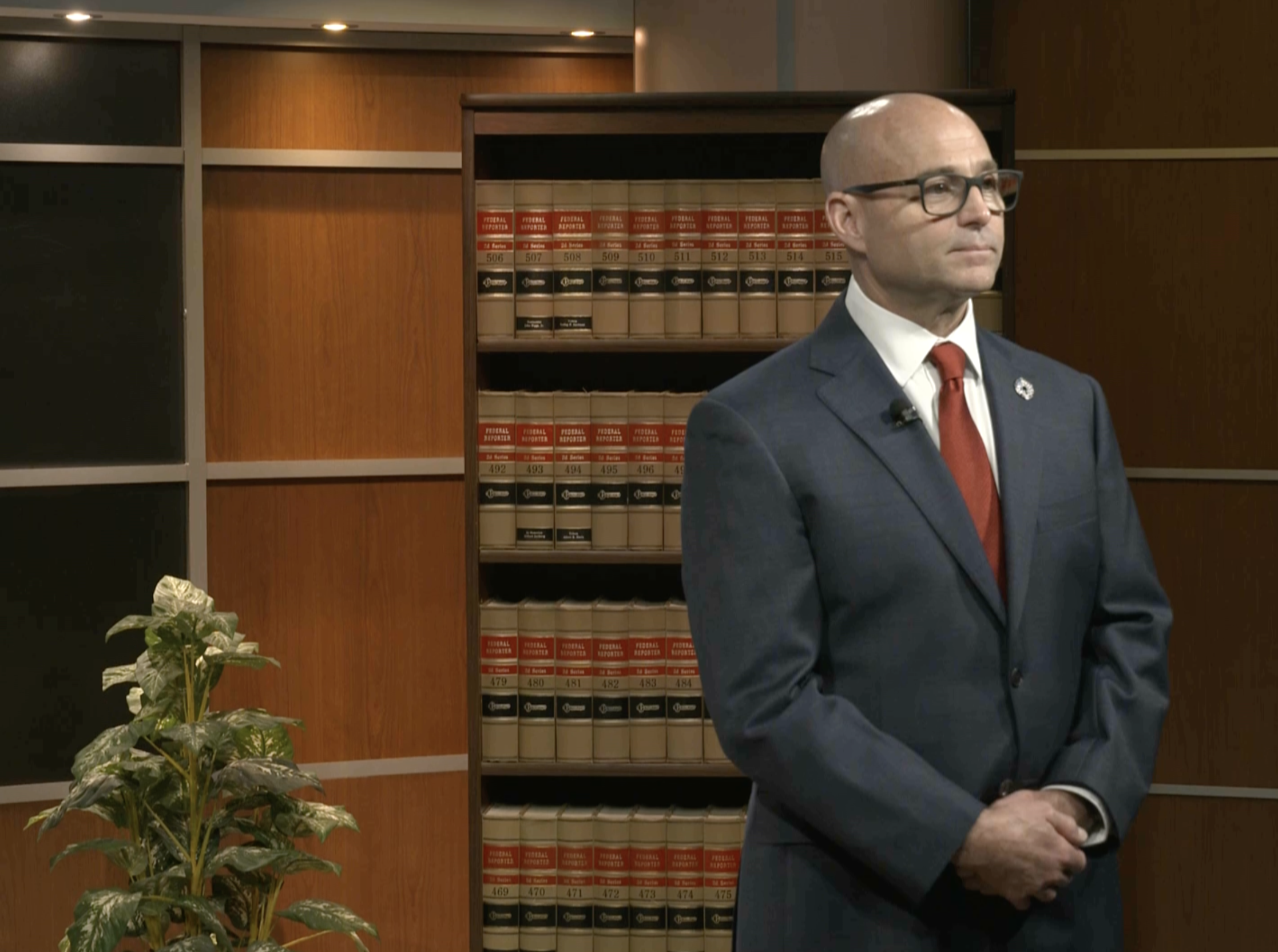
In a recent interview conducted by Retired Sgt. Betsy Branter-Smith, active shooter expert Chris Grollnek, M.S., delved into his extensive background in law enforcement and shared his profound insights on active shooter situations, domestic terrorism, and the pressing need for a paradigm shift in our approach to prevention and preparedness.
 Grollnek’s journey into law enforcement was initially driven by circumstance, as he transitioned from his Marine Corps service to a career in policing. A chance encounter with a Dallas commander during a Ross Perot detail swiftly convinced him of the path he was meant to follow, and he embarked on a remarkable career that would span various roles and responsibilities within law enforcement.
Starting with patrol duty in suburban Dallas, Grollnek’s career saw him don many hats, including assignments in the Gang Unit, undercover narcotics operations, and regional SWAT teams. His journey also led him to serve as a local Special Patrol Corporal and even an investigator in Homicide and Internal Affairs.
However, Grollnek’s journey took a significant turn when he was forced to retire due to injuries sustained during active duty, which left him paralyzed in his left arm. This life-altering experience would shape the next phase of his career, propelling him into the world of active shooter prevention and training.
In 2010, Grollnek found himself directly involved in a real-time active shooter situation in McKinney, Texas. The incident was an eye-opener, as Grollnek, dressed in cutoff jeans and a T-shirt, quickly realized that preparation went beyond the physical aspect of a gunfight. The key issue was that no one present knew what to do, highlighting the need for a comprehensive approach to active shooter prevention and preparedness.
Reflecting on the 2010 attack, Grollnek acknowledged that he had to reevaluate what he knew and what he didn’t, leading him to a deeper understanding of the complexities surrounding domestic terrorism and active shooter incidents. He decided to pursue higher education to augment his practical experience, enrolling in the University of Phoenix, where he became one of the first few individuals in the nation to earn a master’s degree in the phenomenon of active shooters. He also noted the importance of blending academic knowledge with real-world expertise.
Grollnek’s mission is twofold: to bridge the gap between academic understanding and practical application and to educate the public on what to do in the critical minutes before law enforcement arrives at an active shooter scene. He emphasized that the first responders are often the individuals caught up in the event itself.
His PRO (Prevention, Response, and Options) Model seeks to empower individuals with the knowledge and tools to survive active shooter situations, focusing on a critical period that extends from 0 to 8 minutes before police arrive, with scenarios like the Virginia Tech shooting taking nearly 4 hours and 40 minutes to resolve. Grollnek’s model promotes preparedness and emphasizes the importance of mindset, a basic plan, and communication within families.
He further challenged the traditional “Run, Hide, Fight” approach, arguing that it oversimplifies the situation. Grollnek’s mission is to encourage honest conversations about preparedness within families, stressing that everyone should be prepared for the unlikely event of an active shooter situation.
Grollnek believes that both gun control and mental health awareness are essential components in addressing active shooter incidents. However, he emphasizes the need to tackle the problem comprehensively, treating it like cancer and working towards a multi-faceted solution.
In discussing law enforcement training, Grollnek emphasized the importance of programs like ALERT and “Stop the Bleed,” but also noted that something crucial was missing. While armed teachers responded effectively in recent incidents, Grollnek advocates for technology-driven solutions to shorten response times, potentially erasing the crucial initial minutes and providing law enforcement and the public with the “Gift of Time.”
In closing, Chris Grollnek emphasized the need for a fresh perspective on active shooter prevention and preparedness, urging society to embrace the reality that such incidents can happen anywhere. He encourages everyone to take one minute to consider their response plan, emphasizing that preparedness can be the key to survival in an active shooter situation.
Share this article
Written by : Chris Grollnek
Latest articles
May 16, 2026

May 16, 2026
May 16, 2026
