
Community of Experts • Emerging Technology
When Seconds Decide Outcomes
The space between the first indicator and the first responder is where everything gets decided. Close that gap, and you change the math entirely.
When seconds decide outcomes, why do most plans still accept minutes? It is the question we keep returning to at the Active Shooter Prevention Project, LLC (ASPP™), because the honest answer exposes the central flaw in how most organizations think about safety. They build the plan around the response to the call, the lockdown, the arrival of help, and quietly accept the long, dangerous interval before any of it begins. Federal preparedness guidance notes that active shooter incidents are frequently over within 10 to 15 minutes, often before law enforcement can arrive. That interval is not a footnote; it’s where harm happens.
Our work is built to compress that interval from both ends. The P.R.O. Model™ Prevention. Response. Options. puts prevention first and makes response the backup. We work the front end, identifying and interrupting threats upstream, before a moment of crisis is ever reached. But we are clear-eyed: the backup still has to be fast. So when technology can shrink the response side of the equation, that is not a competing approach. It is the same road, traveled together.
Non-violent solutions to violent crimes, that’s upstream thinking.
Three Layers That Close the Gap
Closing the gap is not one product; it’s a sequence. Detection, see (visualization), respond, where each layer hands a faster, clearer picture to the next, and to the humans who have to make the call. Three capabilities within our Community of Experts illustrate how it fits together.
1. Detection – Computer Vision
Computer vision is the detection layer. Platforms such as Scylla apply artificial intelligence to existing camera feeds to recognize the signature of a threat, a visible weapon, and alert people in real time. The right way to understand it is as a smoke detector. A smoke detector does not make decisions and does not watch you; it watches for one specific hazard and tells a human the moment it appears. That framing also answers the privacy question honestly: weapon detection is an alerting tool, not surveillance of individuals. And where a smoke detector senses the precursor, gunshot detection is the fire alarm panel that pinpoints the active event. Verification of what is happening and exactly where, so no one loses seconds debating whether it is real.
2. Orientation – Data Visualization & the Digital Twin
An alert tells you something is happening. A map tells you where and how to move. This is data visualization, a different discipline entirely from computer vision, and it is the layer we explored on The Joe Piscopo Show. Detailed indoor maps make navigation possible in the same way a satellite image on Google turns an unfamiliar place into something you can read and route through. Built from a running 360° video walkthrough, the model data-visualizes every room, and that same model guides the optimal placement of sensors and nodes throughout a facility. The collection method produces a digital twin, a living, navigable model of the building, the kind of indoor-mapping capability emerging platforms like LiveTwin are built around. We can do all of it, end to end.
3. Response – The Indoor Drone
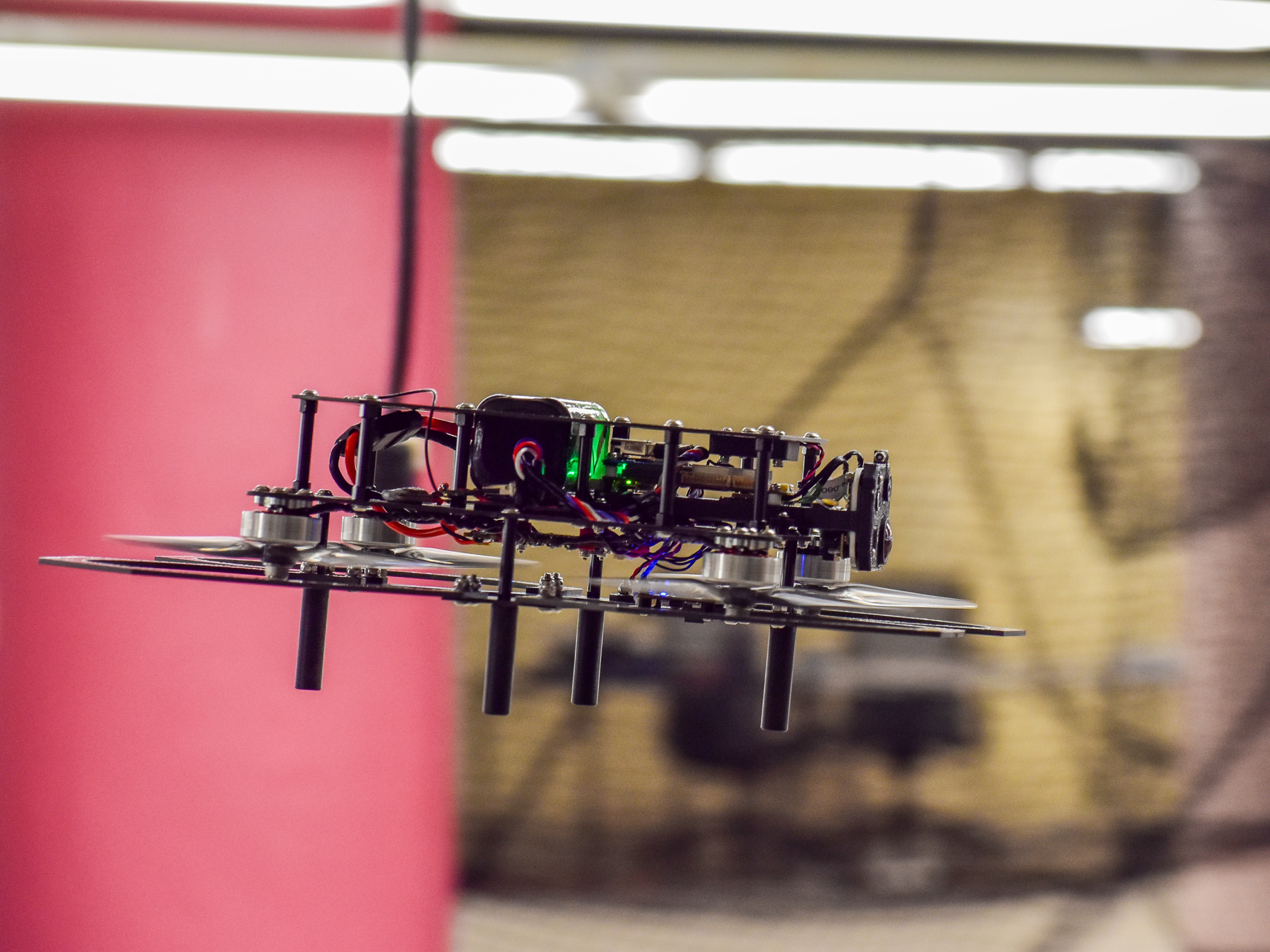
We are proud to work alongside Brecourt Solutions, Inc., a valued member of our Community of Experts, and its founder, Jeff Ross, a former U.S. Navy SEAL. Brecourt’s Indoor Drone as First Responder (iDFR™) is exactly that: a first responder that arrives before the first responder. Navigating GPS-denied indoor spaces by the digital twin, it puts eyes on a developing situation in seconds, carries its payload to where it is needed, and feeds real-time intelligence to the people who have to make the call. Operating across the network of nodes, it turns a building’s own footprint into a live picture for command. For the decision-maker, that is the difference between acting on a fragment of a 911 call and acting on what is actually happening, where it is happening, right now.
Autonomous Technology, Proactively Applied
Detection alerts. The digital twin orients. The indoor or outdoor drone responds. Each layer compresses the seconds, and none of it replaces the human at the center; it augments and sharpens the picture so the human decides faster and better. This is the conversation we are carrying into the rooms where it matters most. At the NDIA Future Force Capabilities Conference in Las Vegas, Chris Grollnek, our founder, is presenting on the Robotics track, Autonomous Technologies for Proactive Threat Prevention in Complex Environments, examining how indoor mapping, spatial intelligence, and autonomous platforms can be deployed not as reactive tools, but as proactive instruments of prevention. The thesis is the one we carry everywhere: the most advanced technology earns its place when it serves the front end of the problem, not just the aftermath.
Why ASPP Champions This Work
Chris Grollnek, Active Shooter Expert and founder of ASPP™, brings a rare combination to this space: a Former U.S. Marine and retired police detective corporal who was involved in an active shooter event firsthand, then spent more than a decade building the prevention discipline from the ground up. That background shapes how we evaluate every partner and every platform, not by the polish of the pitch, but by whether it measurably closes the gap and protects people. It is the same discipline that has carried these solutions from concept to deployment in the field, sold and stood behind in front of the executives, agencies, and institutions responsible for keeping their people safe. We do not endorse technology we would not stake our own credibility on; all of our partners clear that bar.
As Heard On Air
Chris joined The Joe Piscopo Show to discuss prevention-first security and the data visualization driving smarter, faster response including the smoke-detector framing for threat detection and the case for closing the gap from minutes to seconds.
Read the full conversation →
The Joe Piscopo Show • Lightly edited for clarity.
Joe Piscopo: Chris Grollnek is kind enough to jump on the air with us, retired police detective corporal, active shooter expert, and founder of the Active Shooter Prevention Project. Chris, welcome back. We always seem to wait until an event unfolds, but you put out a piece online that I just retweeted a great post. Were you talking about a device that detects guns when they come close to an area? Is that what that was about?
Chris Grollnek: It was about two things, Joe. First, determining where a firearm or weapon, even a knife, or bad intentions could show up, through the lens of a camera that doesn’t keep a memory like metadata. It’s not focusing on a human, so it’s not violating anyone’s rights or eavesdropping. Then it puts that alert into a visualization platform. Think about the map on your dashboard, the icon that says there’s a gas station on the right. Now imagine it popped up and told you, “Your family is driving down that street, and there’s a threat to have them turn around.” It works outdoors, indoors, anywhere you position that type of technology.
Joe Piscopo: You see? You listen to this show, you get answers. We’ve got to do this. Chris will get all the information to anyone listening, because this is good for schools and religious organizations.
Chris Grollnek: More than good, Joe. It’s not a false sense of security, and it’s not over-security. It augments the human. Good governance, within the boundaries of ethics, and you always have a human in the loop, but you don’t have to have a human do the entire thing. Because humans are humans, we don’t always know how we’ll act or react. We’ve seen officers over the years do exceptionally good things, and sometimes the opposite. We need technology to augment that. That’s what started this path four or five years ago. You can’t open a school or a house of worship without a fire code, without fire extinguishers or smoke detectors.
Chris Grollnek: These systems are nothing more than detection devices. If a gun is present, it detects it and alerts you just like a smoke detector. If a gunshot rings out, it detects it and tells you where it is, like a fire alarm panel. Before and after. And both are digitally visualized on a map. What does “digitally visualized” mean? Forty years ago, you kept a Thomas Brothers map behind your seat and opened to the page you needed. Then came the TomToms, then MapQuest online, then your phone, then your watch. So why not go indoors? When you walk up to the front door of a building, that map ends. Now we’re exceeding that boundary, you have a visualized entry. It’s like putting a satellite view of Google Earth on whatever device you’re looking at, except now you’re looking indoors, where you are. You can follow your children at a school, a mall, or a house of worship on a Sunday. You want a reunification point if something goes wrong, a direction to get out. It’s just logical.
Joe Piscopo: God bless you for this. So what happened in Ohio? This was near Toledo. I watched it unfold all night and thought, my gosh, it’s anywhere, always, all the time now. Twelve wounded. Was that gang-related? Do we know?
Chris Grollnek: We don’t know if it was gang-related, but the probability is that two people who were upset with each other chose firearms to take out their aggression. Twelve innocent people were shot. The good side of this morning’s conversation, to my knowledge, no one has passed, thank goodness, and I believe most are out of the woods. But what a tragedy: you’re at a festival, minding your own business. Let’s talk about visualization for a second. It takes zero to eight minutes for something like this to unfold. The name doesn’t matter, active shooter, mass shooting, gang-related; semantics don’t matter. Two people got into a shootout and ended up shooting twelve others.
Chris Grollnek: It took paramedics about five minutes to reach the first wounded person, because they were at the fair. It took police about seven or eight minutes to even find where they were going. And that’s within the national average; that’s actually exceptional police work. So if we want exceptional police work at the eight-minute mark, then we have nothing left to discuss. But I don’t think that’s good enough. I think we can get it down to zero minutes.
Joe Piscopo: I was talking about doing an event with one of my religious buddies. There was a sheriff out front. I thanked him for his service, and he said, “It’s sad, but we’ve got to be here.” You’ve got to put somebody out there. But what you’re describing, I just found that piece and retweeted it: “When Seconds Decide Outcomes Why Do Most Accept Minutes?” from Chris Grollnek. You’ve got to see it. This device can detect something, and I’m shocked we don’t look into it more. Sooner or later, they’ll see it and use it. They won’t give our show credit, but that’s okay, we’re good to share if it’s good for the country. Where can we find you, Chris? If there’s a religious organization or a school with problems before it turns deadly, where can we find this information, sir?
Chris Grollnek: You can just type “active shooter expert” into Google, probably the easiest way to find me. You can’t “NOT” find me; I’m the first thirty-two pages of Google. And that’s not SEO, we’re not buying placement. This is a solution that works. That’s why it’s trademarked. And we give away more than we sell. I’ve told you that for five years now.
Joe Piscopo: I appreciate that. Chris Grollnek, active shooter expert, is the man. A great chat solution-based is what we’re looking for. All the very best to you, my friend, and thank you for taking the time, as always.
Chris Grollnek: Stay safe, Joe. I appreciate you very much, and all your listeners, too. Thank you.
Joe Piscopo: Thank you, sir, Chris Grollnek, active shooter expert. There’s technology to stop this, and I find it puzzling why more people aren’t on it. That’s what we’re talking about: solution-based.
It is all one road, the road to Destination #NeverHere™. The P.R.O. Model™ is how we get there. Technology like this makes the backup faster while we work, every day, to make sure the backup is never needed.
Where is the response gap in your building, and who is closing it?
If you do not know the answer, that is exactly where we begin. Start a conversation with ASPP™.
Related Reading
Share this article

Written by : Chris Grollnek
Active Shooter Expert Chris Grollnek (#activeshooterexpert) is a highly sought-after international public speaker, trainer, educator, writer, and director and has appeared in numerous documentaries. Active Shooter Expert Chris Grollnek also provides specialized consulting services to Fortune 500 companies and special events. Grollnek has testified about the Terrorism and Counterterrorism training needs of the United States and beyond before the U.S. Senate Ways and Means subcommittees in the Hart Senate office building in 2002. Leading up to his testimony before the U.S. Senate, Chris Grollnek was invited by the Center for Strategic and International Studies (CSIS) in Washington D.C. to provide insight to Ph.D. and Senior Executives Staff of the U.S. Government on subterranean training, complex curriculum development, and public lectures.
Latest articles
June 10, 2026
June 10, 2026
June 10, 2026
